Category: Uncategorized

  • If You’re Under 3 Years in Interior Film, Focus on 상업시설

    The Korean interior film industry is now over 30 years old.

    Understanding how it evolved provides valuable insight for anyone planning to start a film installation or distribution business in their own country.

    Markets tend to follow similar economic patterns.
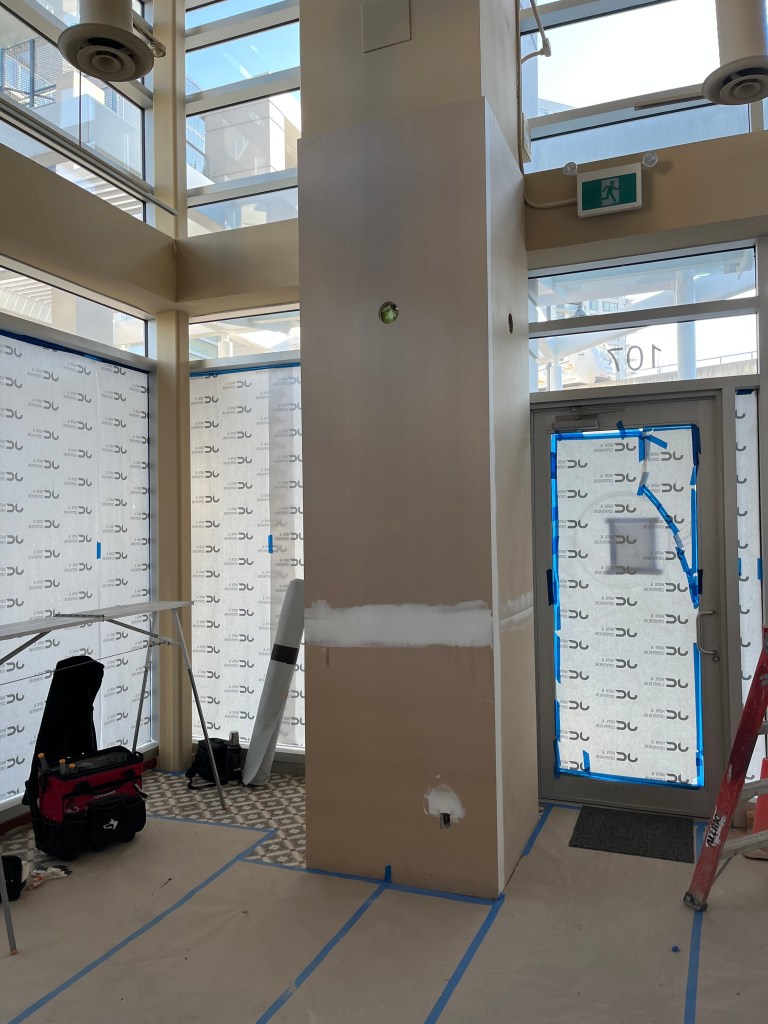

    Commercial Column – Pre-Installation Condition

    1. Interior Film in Korea Began in Commercial Spaces

    In 1993, Korea began installing imported Japanese 3M DI-NOC film.

    At that time, the material was considered premium and relatively expensive.

    As a result, interior film was used primarily in commercial spaces rather than residential homes.

    Applications were limited to columns, feature walls, and selective wood-pattern accents.

    Interior film was originally positioned as a commercial finishing material.


    2. Price Reduction Drove Residential Expansion

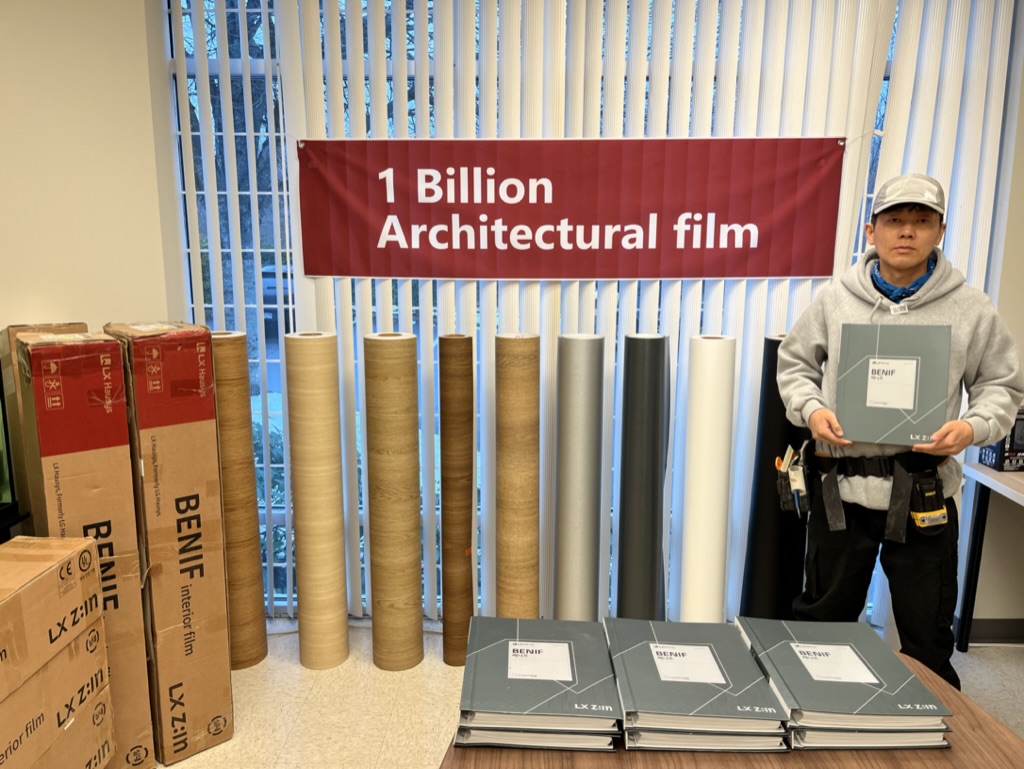
    In 1997, LG Hausys (now LX Hausys) introduced domestically manufactured adhesive interior film, BENIF.

    This significantly reduced material costs.

    Lower prices led to increased demand, and installer numbers gradually expanded.

    Today, Korea has an estimated 280,000 people working in the interior industry.

    Film installers are estimated at around 10,000 nationwide, although the exact number is difficult to verify due to the large number of independent and cash-based operators.

    More than 10 professional academies currently offer specialized film installation training.

    Interior film has become widely adopted in residential renovation.

    However, widespread adoption does not necessarily translate into strong profitability.
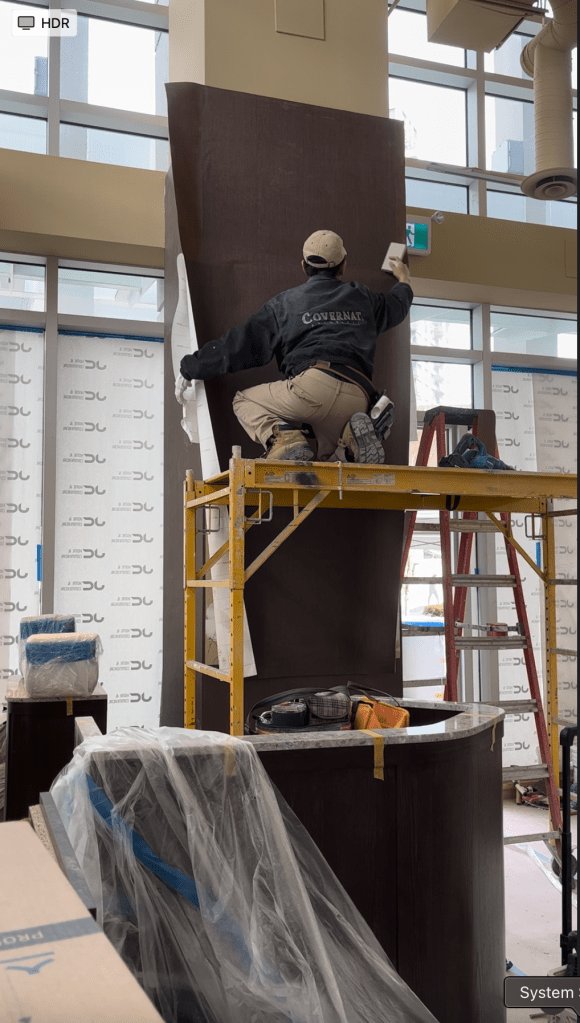

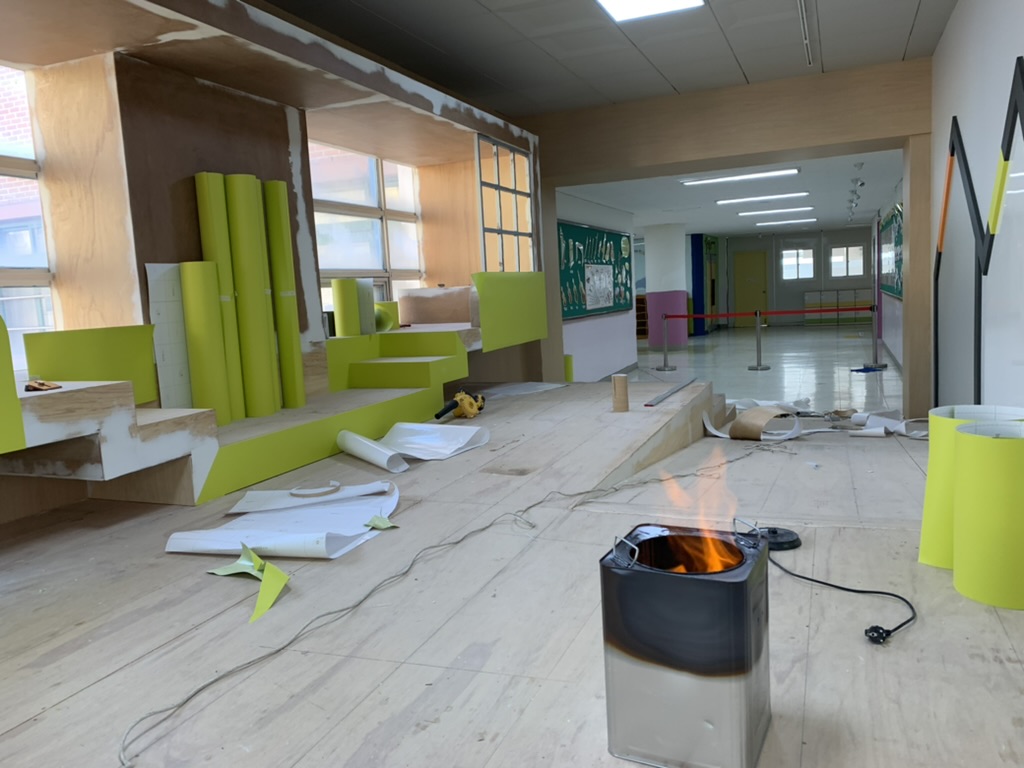
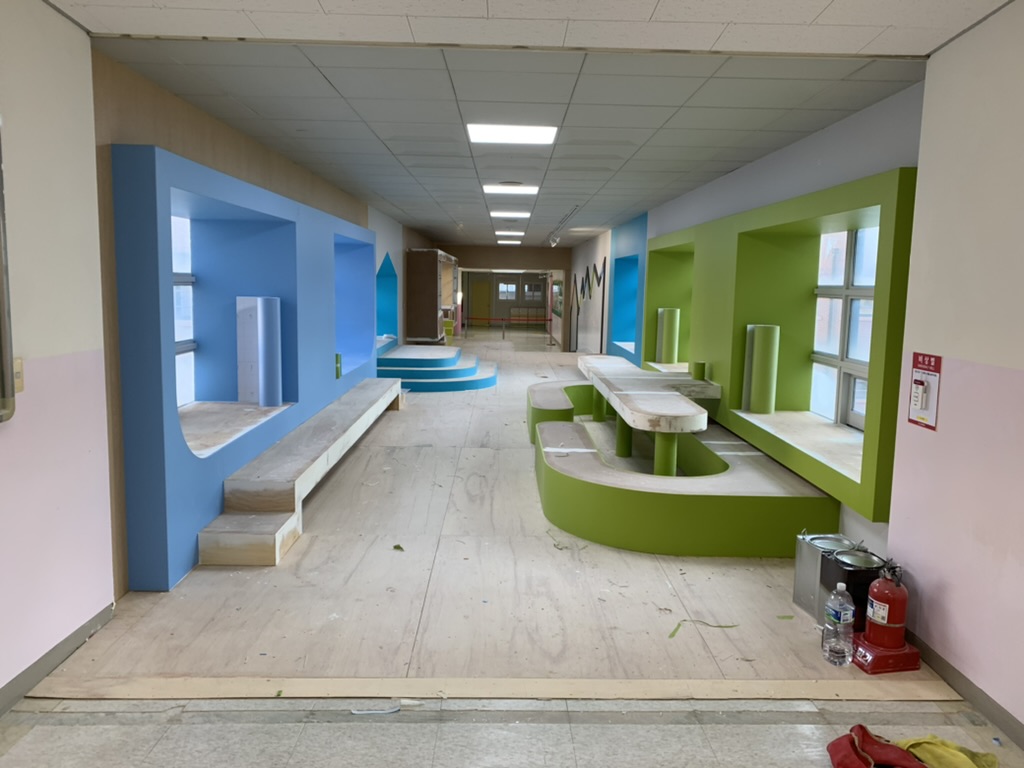
    Commercial Column Installation – Large Continuous Surface

    3. Residential Projects Are Common — But Margins Are Limited

    I have personally worked on more than 150 apartment film projects in Korea.

    Most residential work focused on:

    • Doors
    • Door frames
    • Window frames

    Replacing windows in a typical 30-pyeong apartment
    (approximately 99㎡ / 1,067 sq ft)
    can cost around $10,000 USD.

    For cost-efficiency, homeowners often choose refinishing with film instead.

    In Canada, high-rise apartments were structured somewhat differently.

    However, the economic outcome was similar.

    Margins remained limited.

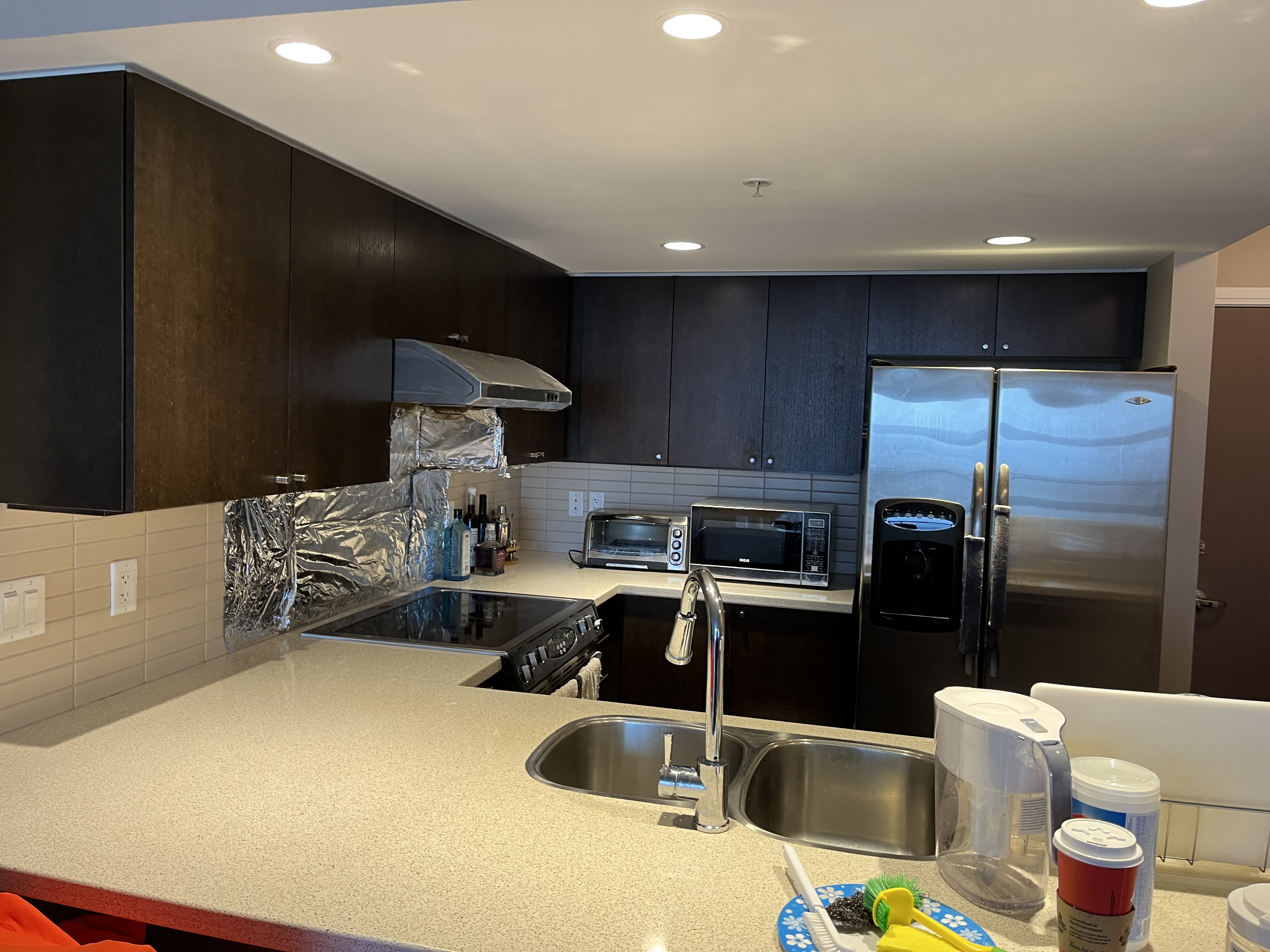
    Completed Commercial Project – Single Day Installation

    4. Real Profit Comparison (Vancouver, Canada)

    I directly compared a high-rise cabinet wrapping project with a commercial project.

    The economic difference was structural rather than marginal.

    Commercial work generated approximately 2× the daily profit.


    Project Comparison In Canada

    CategoryApartment CabinetsCommercial Column
    Total Project Price2,520 CAD1,175 CAD
    Cutting Pieces753
    Film Used15m (49.2 ft)Provided by contractor
    Material Cost650 CAD0
    Work Duration3 Days1 Day
    Total Profit1,830 CAD1,175 CAD
    Profit Per Day610 CAD1,175 CAD

    Interpretation

    The apartment project required:

    • 75 individual cuts
    • Three full working days
    • Installation within an occupied residential environment

    The commercial project required:

    • Three cuts
    • One working day
    • Installation in an empty commercial space

    Same material.
    Same installer.
    Comparable skill level.

    Different economics.


    5. The Core Variable: Installed Surface Area

    Residential projects typically consume one to two rolls of film.

    Commercial projects may use 10 to 20 rolls within a single contract.

    Commercial environments allow long, continuous installation runs across walls, columns, and panels.

    As a result, installed surface area per hour increases significantly.

    Interior film installation is fundamentally a surface-area-driven business.

    Revenue correlates directly with the amount of square meters installed.

    This is not an opinion.
    It is a structural characteristic of the business model.
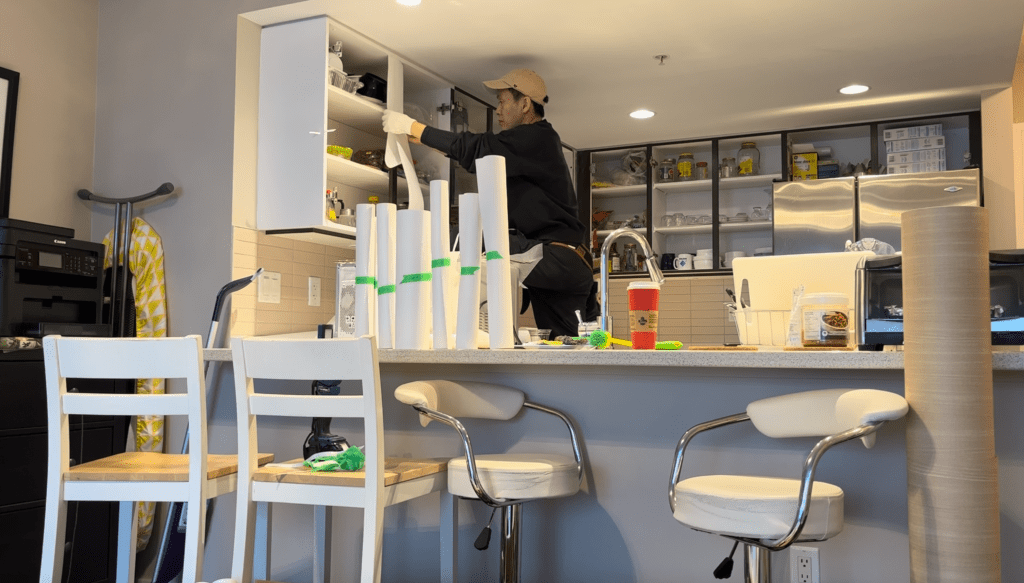

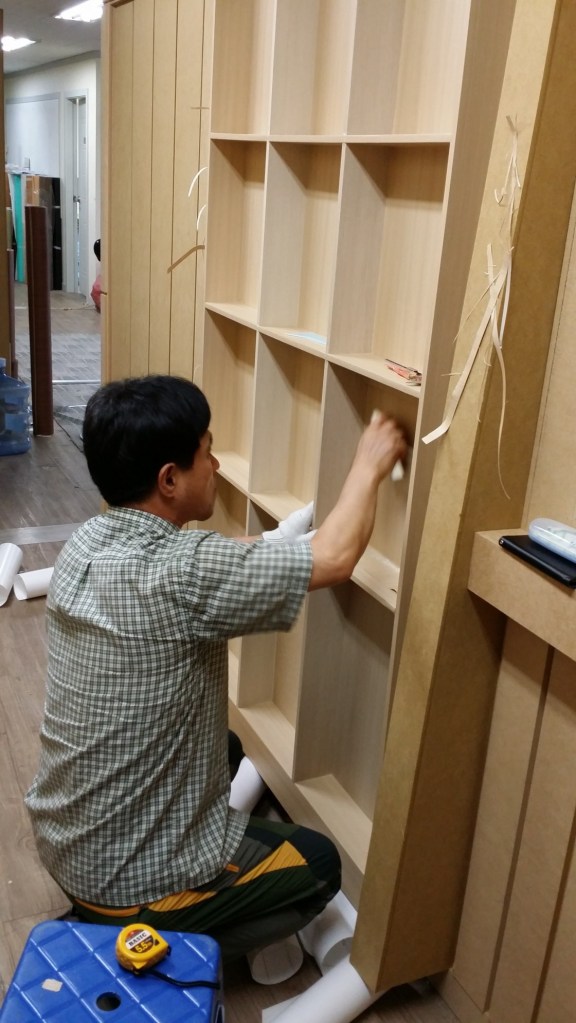
    Residential Cabinet Wrapping – 75 Individual Pieces

    6. Structural Limitations of Residential Work

    Residential projects tend to involve:

    • One-time customers
    • Limited repeat volume
    • Occupied working environments
    • Restricted productivity

    Cabinet wrapping can serve as skill development.

    However, it does not inherently create scale.


    7. Commercial Projects Accelerate Growth

    Commercial work provides:

    • Higher material volume
    • Faster repetition
    • Greater daily profit potential
    • Accelerated technical development

    If you have less than three years of experience, you are likely still in the early stages of professional development.

    A practical benchmark:

    If wrapping a standard door frame requires more than 35 minutes, further repetition is necessary.

    Commercial environments provide that repetition.

    Repetition improves efficiency.
    Efficiency increases reliability.
    Reliability strengthens earning potential.
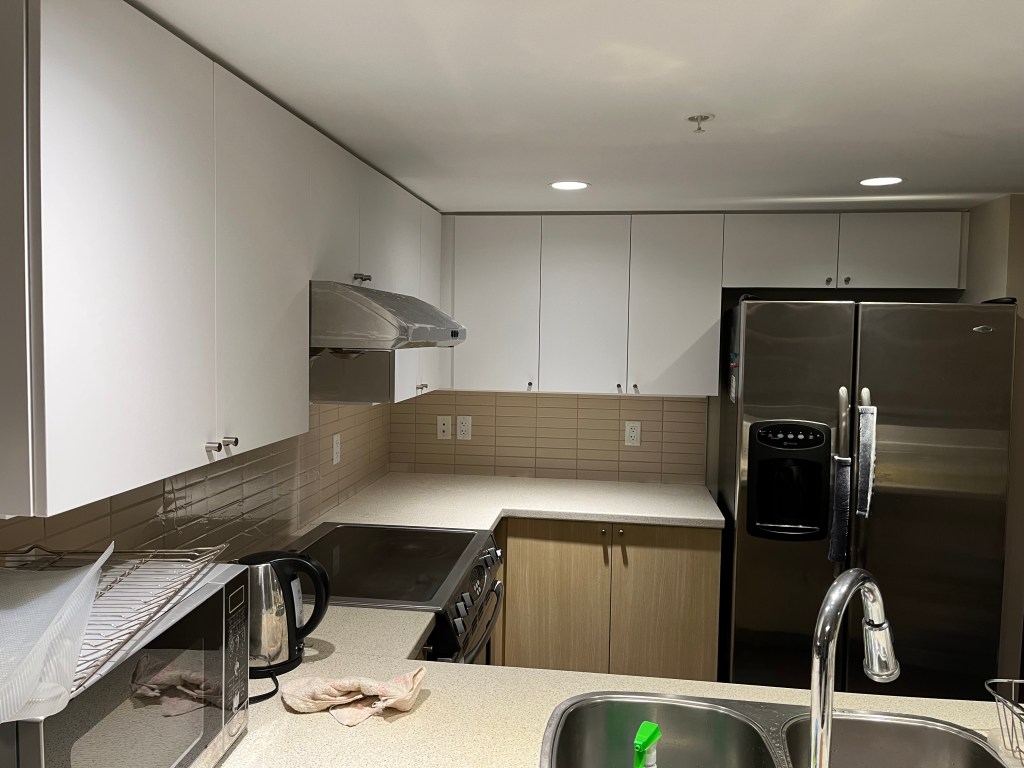
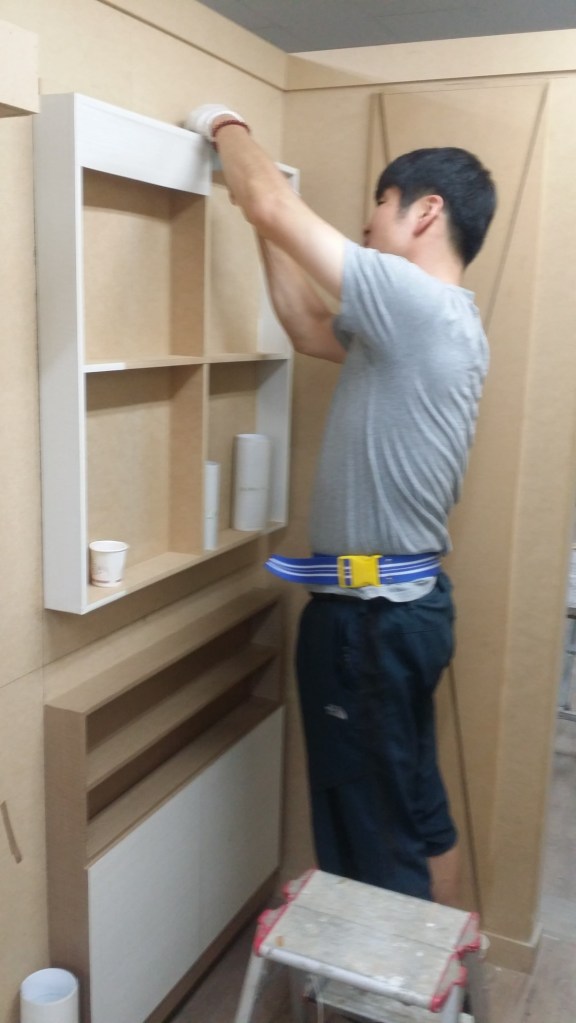
    Completed Residential Cabinet Project – 3 Days of Work

    Strategic Path for Long-Term Success

    If the objective is to build a scalable interior film business, the progression typically follows this structure:

    Commercial installation
    → Expansion of installation teams
    → Establishment of domestic film distribution

    Commercial contracts create material volume.

    Volume enables team growth.

    Team growth creates operational leverage.

    Operational leverage creates entry into distribution.

    That is how a sustainable interior film business is built.

    Not through isolated cabinet projects.

    But through controlled commercial surface area.
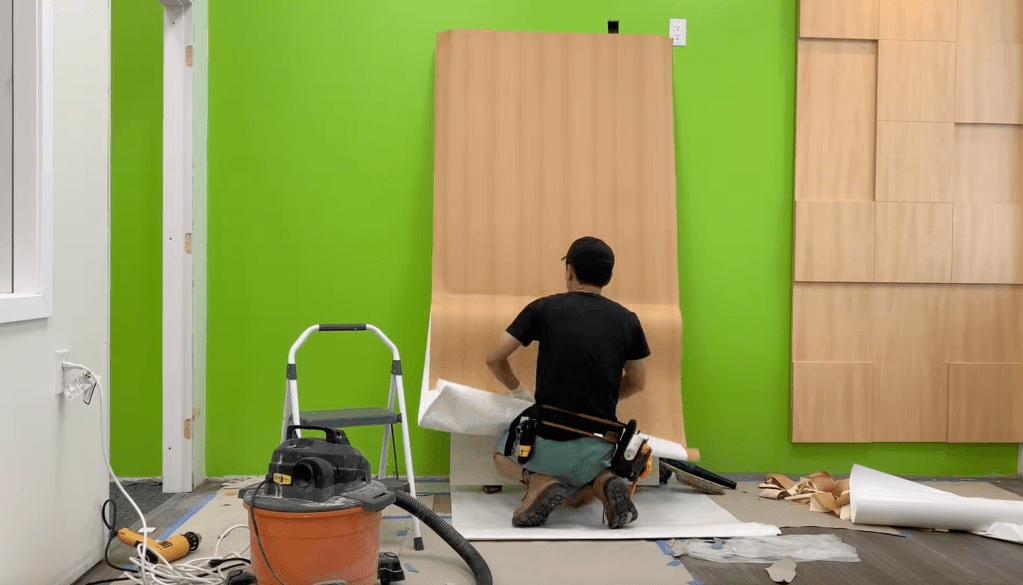
  • Making $3,940 a Day Wrapping Commercial Doors

    If You Wrap Kitchen Cabinets, You’ll Stay Broke

    Commercial Door Wrapping Is Where the Real Money Is

    Five months into offering interior film installation in Canada,
    I finally started landing one commercial door-wrapping project every month.

    The turning point came when I secured a contract tied to a U.S.-based kids coding franchise operating  hundreds of locations
    that was opening 15 locations across Greater Vancouver.
    (The brand operates 260+ locations in the U.S.)

    The work came through a high-performing Korean renovation company
    doing over $10M in sales

    They were different from most contractors.

    They actively used interior film—
    not because it was trendy,
    but because it solved real problems.


    Why They Chose Interior Film

    Their approach was simple.

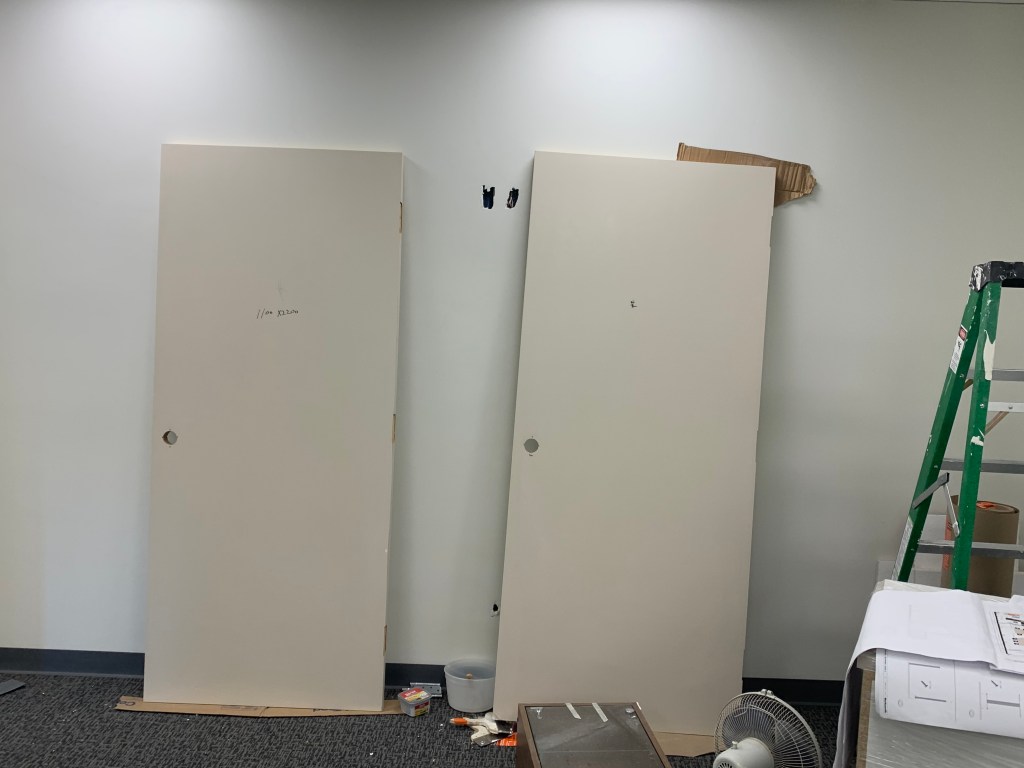
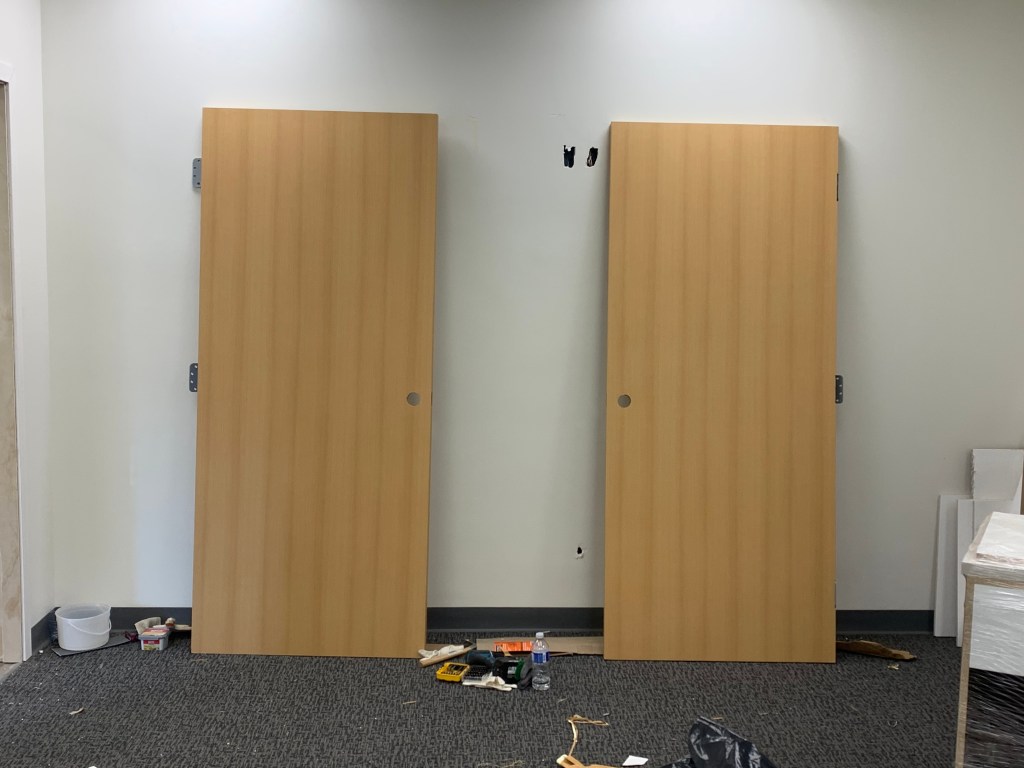
    They purchased $100 white doors from like Home Depot,
    then had me wrap them with LX Hausys interior film
    (formerly LG Hausys).

    This gave them:

    • A custom, high-end finish
    • Brand-level consistency
    • And a major cost advantage

    For me, this was a first deal with them.

    So I made a decision early on:

    Profit second. Trust first.

    That decision changed everything.


    How the Pricing Actually Evolved

    Here’s how my door-wrapping pricing progressed—step by step.

    First Projects

    • Hourly rate: $30/hour
    • About $240/day
    • Film cost billed separately

    Was it cheap?
    Yes.

    But this wasn’t about money yet.

    In North America, hourly subcontracting is rare—
    and that’s exactly why I chose it.

    Why I Started Hourly (On Purpose)

    1. Labor law reality
      Labor costs come first.
      Getting paid hourly confirmed this was a legitimate contractor.
    2. Risk reversal for the contractor
      To them, I was an unknown installer.
      Interior film done wrong is a disaster.
      Hourly pricing lowered their risk.

    They could test me
    without committing to a full project price.


    Third Project and Onward

    • $300 per door
    • Film cost included ($105 per door)

    By then, they had already verified:

    • My finish quality
    • My speed
    • And that interior film actually worked

    Final Project in Canada

    • $499 per door
    • Film cost included ($105)

    This was the peak pricing.


    The Numbers (No Fluff)

    Let’s break it down.

    Final project pricing (per door):

    • Charged: $499
    • Film cost: $105
    • Net profit per door: $394

    Time required per door:

    • ~1 hour
      (film cutting + surface prep included)

    Daily output (solo installer):

    • 7–10 doors per day, depending on site conditions

    I typically worked 10-hour days.

    Result:

    • 10 doors × $394 = $3,940 net profit per day

    No employees.
    No office.
    No ads.

    Just skill, speed, and positioning.


    Material Reality (North America Standard)

    • Standard interior door size:
      32” × 80” (81cm × 203cm)
    • Film required per door (double-sided):
      ~4.1m / 161 inches
    • Interior wood-grain film roll price:
      ~$1,200–$1,500 per roll
    • One roll covers:
      ~12 doors (double-sided)
    • Primer cost:
      Almost zero
      ($15 for 3kg lasts nearly a year)

    One Critical Rule: Don’t Hang Your Own Doors

    If you work solo:

    Never handle door removal and reinstallation yourself.

    • It requires extra labor
    • It slows you down
    • It destroys your margins

    Instead, have the renovation contractor handle it.

    Most are happy to do so—
    because they want speed and clean results.

    Yes, some doors can be wrapped without removal.
    But the best finish and fastest workflow
    comes from wrapping doors off-hinge.

    That’s the professional method.


    The Key Insight

    At the beginning, I thought:

    Interior film = kitchen cabinets.

    That assumption was wrong.

    Kitchen cabinets are slow.
    Commercial doors scale.

    Same material.
    Same installer.
    Same day.

    But radically different money.


    What Comes Next

    This raises two obvious questions:


  • The Real Problem Was Pricing $$??

    About two months after I started offering interior film installation in Canada, I finally landed my first real job.

    It was a kitchen cabinet wrapping project in a 30-year-old semi-basement residential unit. The lead came through a Korean general contractor (GC).

    The GC pitched the homeowner like this:

    “If you’re going to rent out the basement, installing brand-new cabinets makes no sense. Film refinishing is a much better option. It cuts costs by 70–80%.”

    That pitch got me the job.

    But I immediately hit a wall.

    I had no idea what to charge.

    I didn’t know local pricing standards. I had no mentor in Canada. And because it was my first order, I wanted it—no matter what.

    From the conversation, I could tell the homeowner wanted one thing: cost, cost, cost.

    So I played the same game. I offered a cheaper option using basic white and gray films I had imported cheaply by sea freight.

    For my first deal with that Korean GC, I quoted $700 CAD.

    To be honest, it wasn’t about profit.
    It was about earning trust.

    The GC accepted immediately—zero resistance.

    That should have been my first warning.


    What My First Job Really Taught Me

    On that first job, I used 25 linear feet of film.
    Material cost: $152 USD.

    The job took two full days. It was summer. The film was extremely tacky, and the cabinet surfaces were filthy. Everything took longer than expected.

    After gas and meals, I walked away with about $500–$550 CAD in real take-home cash.

    Not a big number.

    But at the time, money wasn’t my priority. I wanted the GC to trust my finish.

    That job taught me something far more valuable than the cash.


    Why I Cut That First Korean GC Off

    After the $700 cabinet job, the same GC sent me two or three similar kitchen cabinet inquiries.

    I declined them all.

    Here’s why:

    He specialized in old, low-end rentals. His clients were mostly Korean landlords, and they didn’t pay market rate—they expected below-market pricing.

    Not because they were bad people.
    Because their incentive was different.

    • Owner-occupied clients care about finish, design, and materials.
      They ask how it looks in daylight, how long it lasts, and what brand it is—LX interior film (the former LG interior film), 3M, and other recognized brands.
      They’re not buying the cheapest option. They’re buying how it looks, how it lasts, and what brand is on it.
    • Rental owners care about cost, cost, cost.
      Spend as little as possible. Rent it out as fast as possible.

    That single difference determines who makes money.

    I didn’t understand this at first. In North America, many homeowners treat renovation as investment, not expense. The nicer the home, the more they prefer better materials and better methods.

    It also changed how I saw spending behavior.

    Some people put their money into cars—German luxury brands, Porsche, the badge game.
    But many high-end homeowners don’t obsess over cars. They invest in the house. The finish is the status.

    Now compare these two clients:

    • An owner-occupied client living in a luxury $8M downtown high-rise
      vs.
    • A rental owner renovating a 40-year-old semi-basement for tenants

    Who pays more?

    My decision took less than one second.


    The Three Types of GCs I Met

    After one year in the Canadian film business, this became obvious.

    1) GCs Who Don’t Understand Film (Bottom 30%)

    New methods scare them.
    They’ve never used film.
    They only know paint, or tear it out and reinstall everything—nothing in between.
    And they’ll proudly tell you paint is “the best,” because that’s all they know.

    2) GCs Who Only Bring Low-Profit Jobs

    Often Korean GCs with weak English.
    Old houses. Cheap landlords. Tight budgets.
    They demand “cheap” and “fast,” and squeeze everyone below them.

    3) Top-Tier GCs (Top 5%)

    Bigger teams. Fluent English.
    They work with Canadian developers and high-end homeowners.
    They welcome efficient, modern methods—because time and finish quality matter.


    If I Wanted Real Money, I Had to Avoid Kitchen Cabinets

    When I first entered this industry, I assumed interior film meant kitchen cabinets.

    That assumption was wrong.

    After wrapping cabinets about five times, I learned the truth:

    Kitchen cabinet wrapping is terrible money for the time invested.

    A typical kitchen easily becomes 40+ pieces, each packed with corners, edges, alignment, and rework.

    Now compare that to commercial work.

    Example 1: Residential Kitchen Cabinets

    • ~40 film pieces
    • ~4 days
    • Average revenue: $3,000 CAD
    • Usually 1–2 rolls → shipped by air
    • Shipping cost: ~$250 per roll

    Example 2: Commercial Door Wrapping

    • 40 doors
    • Charged: $499 per door
    • Film cost: $99 per door
    • Net profit: ~$400 per door
    • 7–10 doors installed per day
    • Film ordered 2–3 months ahead by sea freight
    • Shipping cost: ~$75 per roll

    Same material.
    Same piece count.
    Same time.

    Four times the profit.

    This was true in Korea as well.

    If I wanted real money with interior film, I had to avoid kitchen cabinets and move into commercial-scale projects—where surface area compounds returns.


    What Comes Next

    That first job wasn’t my breakthrough.
    It was my warning.

    Pricing wasn’t the real game.

    Client selection was.

    In the next article, I’ll explain how I started making $4,000 per day by focusing only on commercial door wrapping in Canada.

    That’s when the game actually began.

  • My First Job in Canada Came In. The Problem Was — I Had No Idea What to Charge.

    For one full year, I devoted myself entirely to learning interior film installation.

    Every morning started at 6 a.m.
    I came home around 8 p.m.
    At night, I watched installation videos and practiced over and over again.

    That routine lasted an entire year.

    During that time, I learned everything I could from a craftsman with 23 years of experience.
    To be honest, my installation speed was only about half of his.
    But the know-how — the things that usually take decades of trial and error — I absorbed in just one year.

    That’s why I consider myself lucky.

    How many mistakes must he have made over 23 years?
    A hundred? A thousand?

    Before I left, he told me this:

    “Go to Canada.
    Use this skill.
    Build a better life.”

    I’m deeply grateful to Mr. Lee for sharing his knowledge without holding anything back.


    In April 2022, exactly as planned, I boarded a flight to Vancouver.

    What I needed to get started in Canada was surprisingly simple:

    • Solid installation skills
    • A sample book
    • A used car — a 2016 Toyota Corolla
    • An Instagram account

    That was it.

    I didn’t need an F-150 pickup truck.
    I didn’t need a luxury office.
    I didn’t need employees.
    And I definitely didn’t need a marketing agency.


    As soon as I arrived in Vancouver, I started calling and texting Korean renovation contractors.

    I was confident about one thing:
    any Korean contractor would already know what interior film was.

    On a Korean community site in Vancouver, I found a list of 70 contractors.

    Out of those 70,
    20 responded positively.
    The remaining 50 were barely working — many of them answering the phone at home while watching TV.

    Here’s what I kept hearing:

    “We’ve needed interior film before, but there was no one who could do it properly.”

    “Five years ago, we hired a film installer, but the quality was terrible.
    We stopped using film after that.
    If you trained in Korea for a year, I’m willing to give you a shot.”

    “Going all the way to Korea to learn interior film — that’s impressive.
    It’s actually a great niche business in Canada.”

    “Since COVID, construction costs have gone through the roof.
    Film demand is slowly increasing here.
    You know how expensive renovations are in Canada.
    Wrapping cabinets, doors, and furniture can save clients 70–80%.”

    “There are no real film technicians in Vancouver.
    If you learned in Korea, I’m sure you’ll do well.”

    After hearing responses like these, I was so excited that I literally danced.


    That said, my original plan was never to focus on Korean clients in Vancouver.

    The Korean market there is simply too small.

    Out of Greater Vancouver’s population of three million,
    only about 80,000 are Korean.

    On top of that, Korean-focused markets tend to have lower price ceilings —
    similar to how Asian restaurants in North America are often cheaper than Western ones.


    Still, I needed work — fast.

    I had to get the ball rolling.
    Once a business starts moving, it builds momentum.
    I truly believed that.
    I was confident in my skills and, more importantly, in my finishing quality.

    The reality was simple:

    1. Promoting interior film services to Canadian contractors who had never heard of it was extremely difficult.
    2. Promoting my services to Korean contractors who already understood film was easy.

    All I had to say was:

    “I install interior film. I trained in Korea.”

    That alone gave me an advantage.


    For the first three months, I followed up once a month — by phone or text.

    To survive during that time, I worked as an Uber driver.


    Then, about a month in, I finally received my first cabinet-wrapping job.

    That’s when I ran into a serious problem.

    I had no idea how much to charge in Canada.

  • Why 99% of Film Academy Graduates

    Fail Their First Cabinet Door Wrap on a Real Job Site

    For three months,
    I did nothing but prep work.

    Eight hours a day.
    Every day.

    Putty.
    Sanding.
    Primer.

    That was it.

    I never touched film once.

    Because I came from a film academy,
    I wasn’t even given the chance
    to hold the material.

    Then I switched teams.

    And things slowly changed.

    “Your prep is fast.”
    “Your prep is clean.”

    As those words stacked up,
    I finally got my chance.

    My first real film job was
    a residential kitchen cabinet door
    in the middle of August heat.

    I peeled the backing.
    Cleaned the surface.
    Lined up the center.

    The moment I tried to lay it down—

    Something was wrong.

    The film was
    far stickier than I expected.

    Even the slightest contact
    and it wouldn’t come off.

    When I forced it,
    the film stretched like melted cheese
    and began to tear.

    Once.
    Twice.
    By the third attempt,
    the film was completely ruined.

    One thought crossed my mind.

    “This is strange.”
    “It wasn’t this hard at the academy.”

    Looking back,
    everything at the academy felt easy.

    For a reason.

    We practiced with
    five-year-old training film
    that had almost no adhesive strength.

    No primer on the surface.
    No real bonding pressure.

    In other words,
    academy practice was like
    elementary school paper folding.

    But the job site was different.

    On site,
    film adhesive + primer adhesive
    equals industrial-strength bonding.

    One mistake,
    and even three grown men
    struggle to peel it off.

    That’s when it hit me.

    The gap between the academy
    and the real world
    was far bigger than I imagined.

    I dropped my pointless confidence
    and asked the site manager for help.

    He didn’t lecture.

    He just said:

    “Lock the center first.”
    “If you’re a beginner, peel the backing slowly.”
    “Work outward from the middle with the squeegee.”

    That was it.

    But inside those few sentences
    were 23 years of field experience.

    That day,
    I learned something
    no academy could ever teach.

    I wondered if I was just bad.

    So I posted in the academy alumni group.

    “Anyone succeed
    wrapping a cabinet door
    on their first real job?”

    The replies came fast.

    99% failed.

    Same reason.

    “The film is way stickier than expected.”
    “It’s impossible to control.”

    That’s when I knew.

    What we did at the academy
    wasn’t real training.

    It was a controlled simulation.

    That day,
    Mr. Kim’s words came back to me.

    “Film work isn’t learned at an academy.
    It’s learned on site.”

    Now I understand him completely.

    YouTube and academies
    are just entry points.

    Real film skill
    is built only in the field.

    That’s why
    99% of film academy graduates
    fail their first real installation.

    Not because they lack talent.

    But because they’ve never faced reality.

    I was lucky.

    I had the chance
    to relearn film work
    from scratch
    on Korean job sites
    backed by 30 years of industry evolution.

    If I had skipped that step
    and jumped straight into Canadian projects,

    my film business in Canada
    would have failed—
    without question.

  • **Where Should a Beginner Start?

    Commercial Sites vs. Residential Sites**

    Following Mr. Kim’s advice,
    I applied to a commercial-focused interior film crew.

    The reason was simple.

    Commercial sites use at least three to five times more film than residential sites.
    That means if you start in commercial work,
    your growth speed is at least twice as fast.

    Residential jobs are mostly repetitive:

    • door frames
    • doors
    • window frames
    • built-in closets

    Commercial sites are different.

    Custom-built furniture.
    Curved structures.
    Large aluminum composite panels (ACP).

    The scale alone puts them
    in a completely different league.

    Mr. Kim explained it this way:

    “If you want to build skill fast as a beginner,
    commercial sites are the only answer.
    The more large sheets of film you handle,
    the faster your hands level up.”

    I found the crew through an online film-installer community
    and joined their team.

    The pay was 80,000 KRW per day.
    Clock in at 7:30 a.m., clock out at 4:30 p.m.

    My first assignment was a school project—a commercial site.

    And on day one, I realized something immediately.

    What I imagined film installation would be,
    and what commercial film work actually is,
    were two completely different worlds.

    I had assumed film work meant
    wrapping cabinets or doors.

    Reality didn’t even come close.

    On commercial sites,
    anyone with less than three years of experience
    isn’t allowed to touch the film.

    So for the first three months,
    I didn’t install a single sheet.

    Not one.

    Every day consisted of just this:

    • putty
    • sanding
    • primer
    • site cleanup

    Prep work.
    Nothing but prep work.

    The crew owner—
    a film installer with 23 years of experience—told me:

    “Film work is ninety percent prep.
    If you can’t prep properly,
    you’ll never install film properly.”

    He was right.

    Film installation isn’t about
    “sticking it on cleanly.”

    It’s about preparing the surface
    so installation is even possible.

    At first, I hated it.

    Why was I spending all day on prep?
    When would I finally get to install?

    But after three months, something changed.

    Every time I was sent to a new site,
    I heard the same comment:

    “Your prep work is amazing .”

    That’s when it hit me.

    I wasn’t a film installer yet.

    I had become a prep-work technician.

    And on real job sites,
    that skill is non-negotiable.

    Three months later,
    I left that crew.

    Because now—
    it was finally time
    to start installing film.

  • Seoul Interior Film Academy: What It Really Taught Me

    As soon as I returned to Korea,
    I enrolled in the Zero Interior Film Academy in Seoul.

    The reason was simple.

    “Before jumping into real job sites,
    at least learn the fundamentals.”

    The program lasted five weeks.
    The tuition fee was 1.5 million KRW.

    But in Korea,
    interior film installation is classified as a government-supported technical skill.
    If you meet the requirements,
    the entire tuition is refunded.

    In other words,
    for Koreans, this film academy is essentially free.

    (If you’re an international reader,
    this is just for reference—
    foreigners are realistically not eligible for this program.)

    The structure of the class was straightforward.

    Theory?
    Barely two hours at the beginning.

    The remaining five weeks were pure hands-on training.

    • Door frame installation
    • Window frame installation
    • Flat panel (alpan) installation
    • Furniture wrapping

    I held film in my hands all day—
    stick it, peel it off,
    and stick it again.

    Around the third week,
    I fell into a dangerous kind of confidence.

    “At this level,
    wouldn’t I already be in the top 10%
    of film installers in Canada?”

    The reason felt obvious at the time.

    I believed I was receiving
    the world’s best interior film techniques,
    compressed into a short, intensive course.

    The instructor had over 10 years of field experience.
    During class, he said:

    “Korea’s interior film industry has about 30 years of history.
    There are over 30 domestic film brands alone.

    In the early days, film was mostly used in commercial spaces.
    But today, with better pricing, durability, and design,
    it’s become a mandatory process even in residential interiors.”

    Then he added:

    “The most widely used films are
    LX Interior Film and Hyundai Bodaq.”

    On the final day, he said this:

    “If you work seriously on real job sites for just one year,
    you’ll be recognized as a professional installer.”

    Listening to that,
    my mind was already racing ahead.

    “So now I just go back to Canada
    and make $1,000 a day.”

    But reality intervened.

    I had already signed
    a one-year lease in Seoul.

    Going back immediately
    wasn’t even an option.

    So I followed the advice of my friend Mr. Kim,
    a general contractor,
    and jumped straight into real interior film job sites.

    That decision
    would change everything.

  • Where Can You Learn Interior Film?

    Is YouTube Self-Study Really Possible?

    I wanted to start making $1,000 a day installing interior film—
    as soon as possible.

    To practice,
    I bought $30 worth of wrapping film on Amazon.
    I watched Korean YouTube channels
    and started wrapping cabinet doors myself.

    After practicing two or three times,
    it didn’t feel that hard.

    That’s when the thought hit me:

    “Interior film installation isn’t a big deal.
    It’s basically just putting stickers on cabinets.”

    So I convinced myself that
    I could learn interior film installation in Canada
    just by watching Korean YouTube videos.

    But that was a huge mistake.

    If you think about it logically, the answer is obvious.
    No customer is going to pay $1,000 a day
    for work that anyone can learn from YouTube.


    Around that time,
    a friend came to mind—Mr. Kim,
    a general contractor in Korea with 15 years of field experience.
    I called him.

    “Hey, you know interior film, right?
    In Canada, installers make $1,000 a day.
    I’ve been practicing cabinet wrapping with YouTube videos,
    and honestly, it doesn’t seem like a big deal.”

    The moment he heard that,
    Mr. Kim cut me off.

    “That level of cabinet wrapping?
    Even I can do that—and I’m a general contractor.
    Anyone can do basic cabinet wrapping.

    Learning film installation from YouTube?
    I’ll say this with 100% certainty
    you will never become a real film installer that way.

    If you actually want to become a professional,
    you need to come to Korea
    and spend at least one year
    working under someone with 20 years of experience
    ,
    starting from the bottom.

    That’s the fastest path.
    And the only accurate one.”

    Then he added one last line.

    “If you walk onto a real job site with YouTube skills,
    you’ll embarrass yourself—
    and no one will ever hire you again.”


    After the call,
    my head was a mess.

    Just the day before,
    I was fully convinced that
    I could learn film installation in Canada
    through YouTube alone.

    But I couldn’t brush off
    the advice of someone who had survived
    15 years in the field.

    After a week of thinking it through,
    I decided to listen to Mr. Kim.

    One month later,
    I packed up my rental house, sold my car,
    shut down my business in Canada,
    and boarded a flight back to Korea.

  • How I Met the Guy Who Made $8,000 a Month Working Five Days

    And How It Changed Everything”

    I first met JEFF — the guy who worked five days a month and made eight grand —
    when I went to get my car tinted.

    I searched the Korean community site for the cheapest tinting service I could find,
    and the owner of that listing turned out to be JEFF.

    When I called him, I learned he didn’t even have an office.
    Which explained the price: $250 for a full windshield tint.

    The job was done in his driveway.
    And honestly?
    The quality matched the price — “okay,” nothing more.

    After he finished, we ended up standing outside his house,
    talking for almost two hours about life in Canada.

    That’s when JEFF dropped this on me:

    “Sushi work? That’s poverty.
    Do what everyone else does, and you’ll earn what everyone else earns — nothing.
    Canada is all about skilled trades.
    I work five days a month doing interior film and make eight grand.
    Tinting is just filler work for easy jobs.”

    Inside, I rolled my eyes.

    “Right… here we go again.
    Another Korean dude in Canada talking nonsense.
    Five days, eight thousand dollars? Come on…”

    As we talked, evening rolled in.
    Then JEFF said:

    “Hey, there’s a jjajangmyeon place here that tastes better than Korea.
    If you’re free, dinner’s on me.”

    A tinting guy offering a $13 meal
    to a customer who paid $250?

    Suspicious.
    But Korean-style jjajangmyeon is my weakness — I couldn’t say no.

    And the crazy part?

    It really was better than jjajangmyeon in Korea.
    Like… 1.5× better.

    That one bowl broke through my guard.
    Not because of the food —
    but because it didn’t match the “liar” stereotype I had in my head.

    There’s something surreal about eating your home country’s food,
    but better, in a foreign land.
    It hits you like a small existential slap:
    “Damn… maybe I don’t know as much as I think I do.”

    That day was when I stopped seeing JEFF as a scammer.

    After that, we started hanging out —
    hiking once a week, grabbing food, just talking about life.


    Then came August 2019.

    My move-out date didn’t line up with my move-in date,
    and I suddenly had nowhere to stay.

    I asked JEFF for help, and he let me crash in his living room.
    I ended up living there for a month.

    And during that month, I witnessed something that shocked me.

    JEFF really did work only five days a month.
    His main work was kitchen cabinet refinishing using interior film.

    Here’s what clients paid:


    One-bedroom apartments

    15–20 cabinet doors

    • $2,500–$3,000
    • 1–2 days of work

    Regular houses

    25+ cabinet doors

    • $4,500–$5,500
    • 4–5 days of work

    Material cost?
    $600–$900, including film + shipping.

    And the Canadian system?
    Clients paid 50% upfront.

    Meaning:

    • Film cost covered
    • Shipping covered
    • Partial profit secured
    • Zero risk of losing money

    It was almost impossible not to profit.

    (Meanwhile, back in Korea?
    10–20% of interior jobs don’t get paid.
    Everything is post-paid.
    Clients ghost.
    Companies close, reopen under new names, and avoid any consequences.
    It’s chaos.)

    I punched numbers into my phone.

    “…Wait. This really is over $1,000 a day?”

    During that month, JEFF and I went to five estimate visits together.

    He told me he once refinished an entire motel in Alberta
    and made $30,000 in a single month.

    And the thing is?

    He wasn’t exaggerating.
    This was how he had lived for ten years
    working five days a month, taking home eight grand.

    He explained it simply:

    “Labor is expensive here.
    Replacing kitchen cabinets costs 5–8× more than film wrapping.
    That’s why Korean interior film dominates.
    It’s unbeatable value.”

    It felt like someone hit me in the head with a hammer.
    A new world opened up — one I didn’t even know existed.

    And in late August 2019, I made my decision.

    I wanted to make $1,000 a day too.
    So I decided to learn interior film.

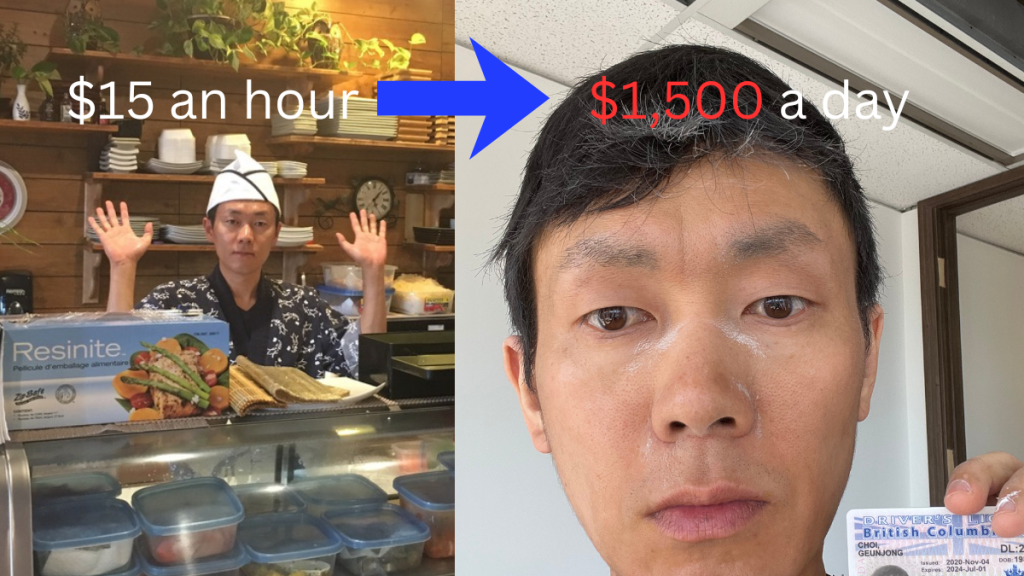
  • From $15/Hour Sushi Cook to $1,500/Day Interior film Installer

    And why I walked away the moment I finally “made it.”

    “Before-and-after journey of an interior film installer: from a $15/hour sushi cook in Vancouver to earning $1,500 a day installing LX Interior Film and Hyundae Bodaq interior film, before a severe skin condition forced a return to Korea. Used in a story about interior film installation, training, and wholesale demand in Canada and Korea.”
    From earning $15 an hour at a sushi bar to $1,500 a day installing interior film in Vancouver — this photo shows exactly where my journey began.

    Three days before flying back to Korea,
    I was standing inside the Vancouver Korean Consulate —
    my final interior-film job in Canada.

    Two days of work.
    Over $3,000 in labor fees.

    Not bad for a guy who, just two years earlier,
    was a $15-an-hour sushi cook in a cramped Vancouver kitchen.
    Back then, I never imagined I’d reach a point where
    I could charge $1,500 a day for my time.

    I spent a full year in Korea learning interior-film installation.
    Then I came back to Canada and started taking on
    both sales and installation jobs.

    One year into my interior-film business in Canada —
    doing both sales and installation —
    contractors were messaging me nonstop:
    “Can you do a film job next week?”
    Two to three inquiries every single day.

    Of course, the first six months were rough.
    I was barely making $500 a day.
    But after a year, whenever I stepped onto a job site,
    I wouldn’t leave for less than $1,000 a day.

    And yet—
    despite all that momentum,
    despite finally breaking into a $1K-a-day skill,
    I’m throwing it all away tomorrow
    and flying back to Korea.

    Why?
    Because something insane happened to my face.
    My Canadian friends literally called me “the Korean zombie.”
    I haven’t looked in the mirror for six months.

    When your face collapses like that,
    the money doesn’t matter anymore.
    A thousand bucks a day?
    Who cares. Try living with a face that’s falling apart.

    If you read Part 2,
    you’ll understand exactly why
    I walked away from all this and went home.

    And listen—
    you don’t have to believe any of this.
    Honestly, I wouldn’t believe it either
    if I hadn’t seen it with my own eyes.

    I didn’t believe a $1,000 day was even possible
    until I met JEFF
    a guy making over $8,000 a month
    working just five days.