Where Should a Beginner Start?Commercial vs Residential Vinyl Wrap Jobs

Commercial vs Residential Vinyl Wrap Jobs

Following Mr. Kim’s advice,
I applied to a commercial-focused vinyl wrap installation crew.


The reason was simple.

Commercial sites use at least three to five times more vinyl wrap film than residential sites.
That means if you start in commercial vinyl wrap work,
your growth speed is at least twice as fast.

Residential jobs are mostly repetitive:

  • door frames
  • doors
  • window frames
  • built-in closets

Commercial sites are different.

Custom-built furniture.
Curved structures.
Large aluminum composite panels (ACP).


The scale alone puts them
in a completely different league.


Mr. Kim explained it this way:

“If you want to build skill fast as a beginner,
commercial vinyl wrap job sites are the only answer.
The more large sheets of film you handle,
the faster your hands level up.”


I found the crew through an online vinyl wrap installer community
and joined their team.

The pay was 80,000 KRW per day.
Clock in at 7:30 a.m., clock out at 4:30 p.m.


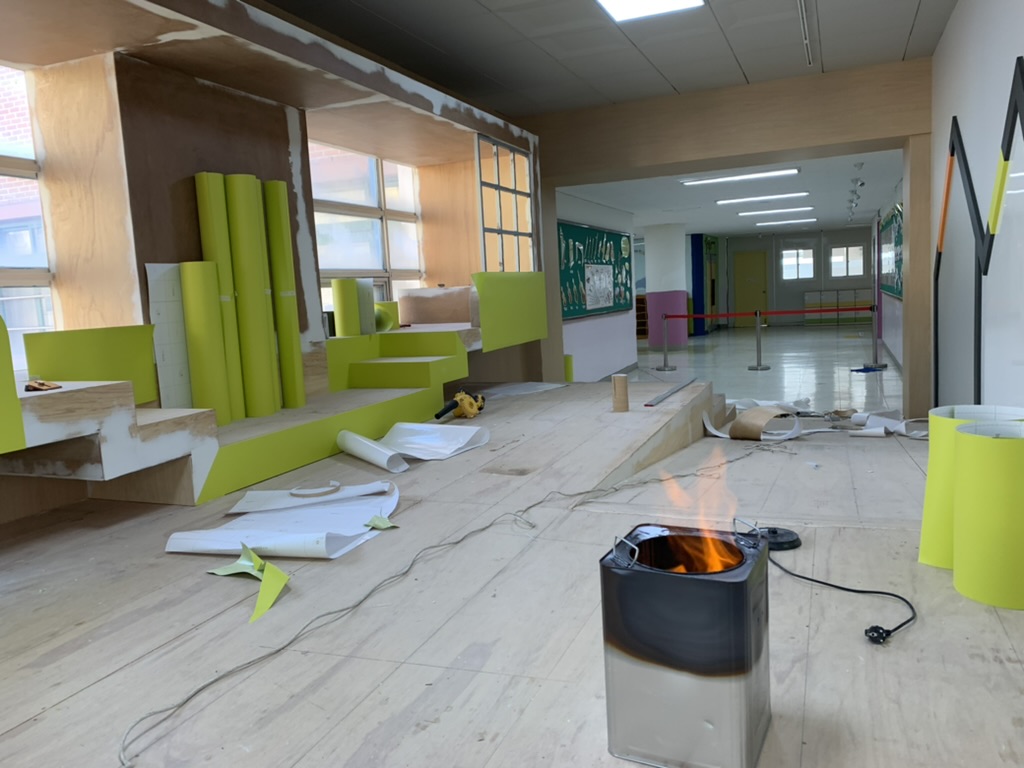
My first assignment was a school project — a commercial site.


And on day one, I realized something immediately.

What I imagined vinyl wrap installation would be,
and what real commercial vinyl wrap work actually is,
were two completely different worlds.


I had assumed the job meant
wrapping cabinets or doors.

Reality didn’t even come close.


On commercial sites,
anyone with less than three years of experience
isn’t allowed to touch the vinyl wrap film.


So for the first three months,
I didn’t install a single sheet.

Not one.


Every day consisted of just this:

  • putty
  • sanding
  • primer
  • site cleanup

Prep work.
Nothing but prep work.


The crew owner —
a vinyl wrap installer with 23 years of experience — told me:

“Vinyl wrap work is ninety percent prep.
If you can’t prep properly,
you’ll never install it properly.”


He was right.

Vinyl wrap installation isn’t about
“sticking it on cleanly.”

It’s about preparing the surface
so installation is even possible.


At first, I hated it.

Why was I spending all day on prep?
When would I finally get to install?


But after three months, something changed.

Every time I was sent to a new site,
I heard the same comment:

“Your prep work is amazing.”


That’s when it hit me.

I wasn’t a vinyl wrap installer yet.

I had become a prep-work technician.


And on real job sites,
that skill is non-negotiable.


Three months later,
I left that crew.

Because now —
it was finally time
to start installing vinyl wrap.

Comments

Leave a comment