The Korean interior film industry is now over 30 years old.
Understanding how it evolved provides valuable insight for anyone planning to start a film installation or distribution business in their own country.
Markets tend to follow similar economic patterns.
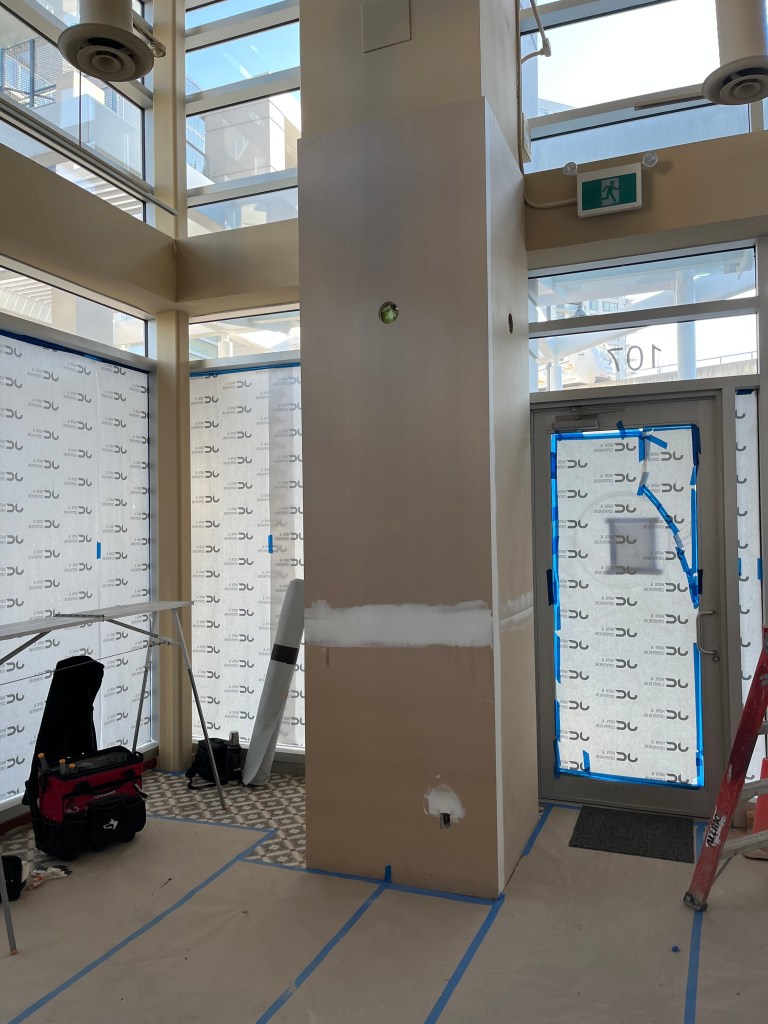
1. Interior Film in Korea Began in Commercial Spaces
In 1993, Korea began installing imported Japanese 3M DI-NOC film.
At that time, the material was considered premium and relatively expensive.
As a result, interior film was used primarily in commercial spaces rather than residential homes.
Applications were limited to columns, feature walls, and selective wood-pattern accents.
Interior film was originally positioned as a commercial finishing material.
2. Price Reduction Drove Residential Expansion
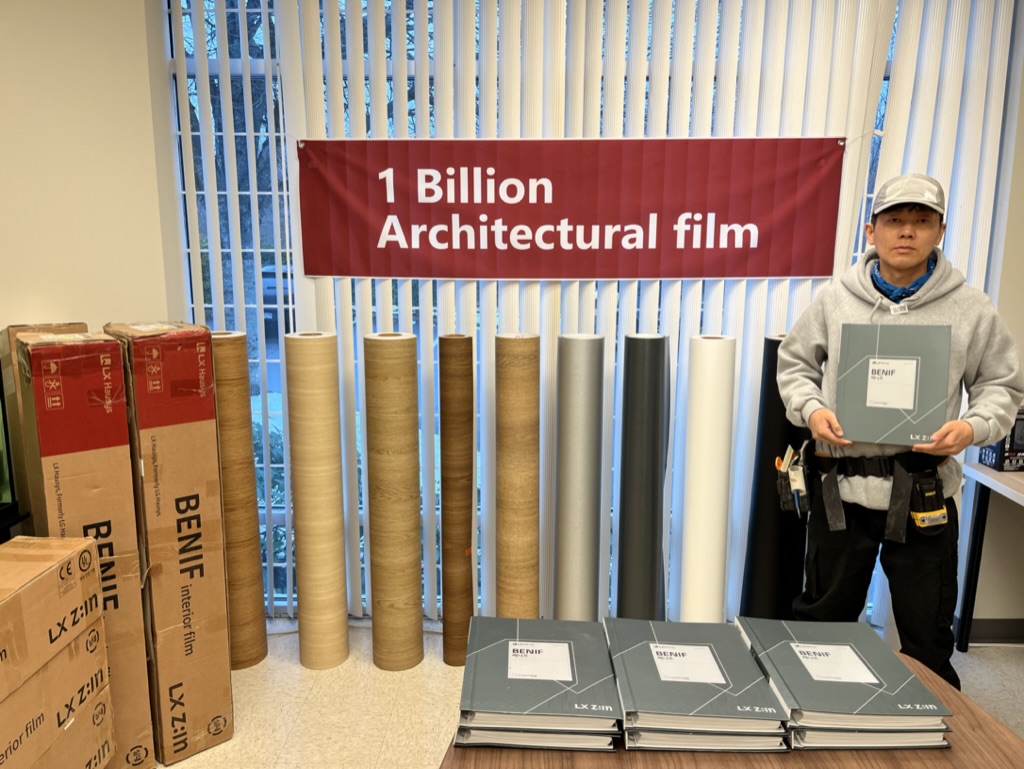
In 1997, LG Hausys (now LX Hausys) introduced domestically manufactured adhesive interior film, BENIF.
This significantly reduced material costs.
Lower prices led to increased demand, and installer numbers gradually expanded.
Today, Korea has an estimated 280,000 people working in the interior industry.
Film installers are estimated at around 10,000 nationwide, although the exact number is difficult to verify due to the large number of independent and cash-based operators.
More than 10 professional academies currently offer specialized film installation training.
Interior film has become widely adopted in residential renovation.
However, widespread adoption does not necessarily translate into strong profitability.
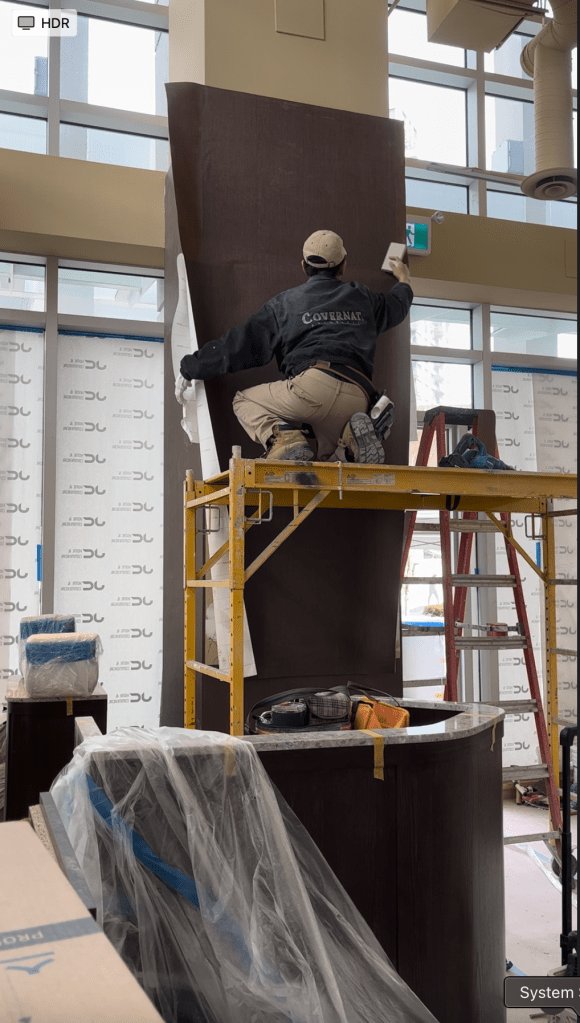
3. Residential Projects Are Common — But Margins Are Limited
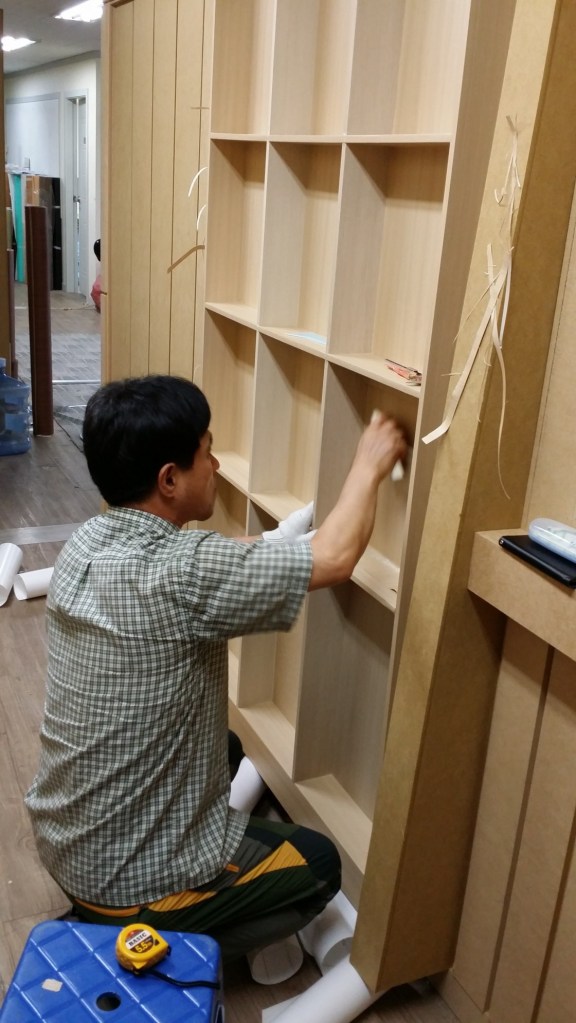
I have personally worked on more than 150 apartment film projects in Korea.
Most residential work focused on:
- Doors
- Door frames
- Window frames
Replacing windows in a typical 30-pyeong apartment
(approximately 99㎡ / 1,067 sq ft)
can cost around $10,000 USD.
For cost-efficiency, homeowners often choose refinishing with film instead.
In Canada, high-rise apartments were structured somewhat differently.
However, the economic outcome was similar.
Margins remained limited.
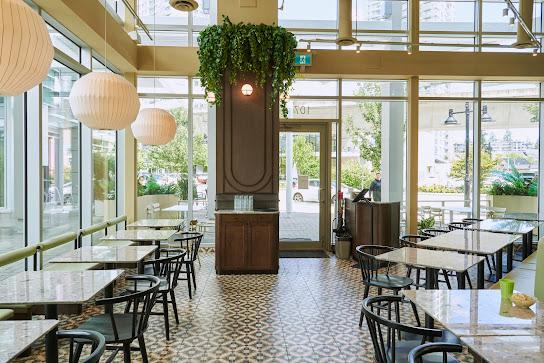
4. Real Profit Comparison (Vancouver, Canada)
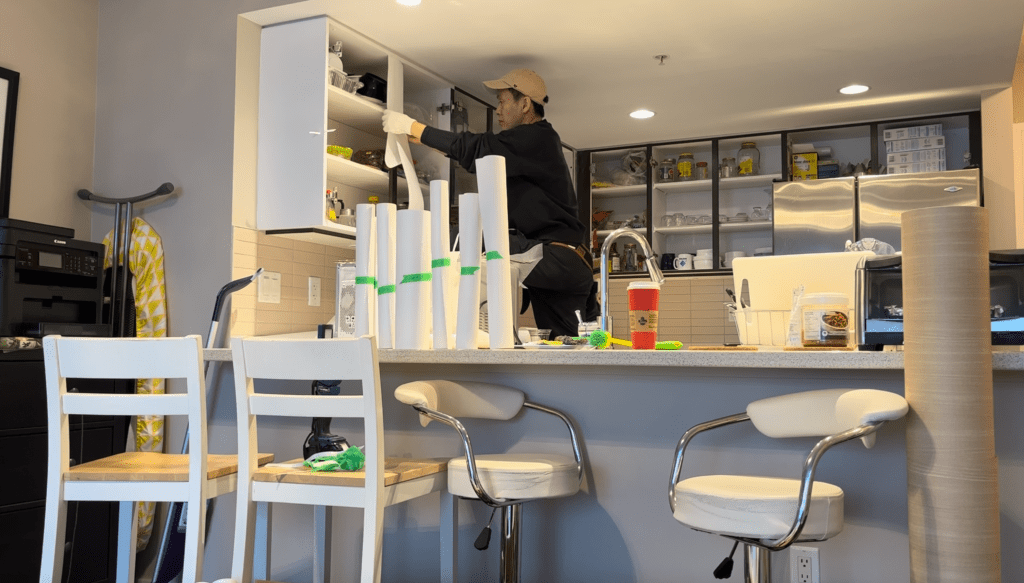
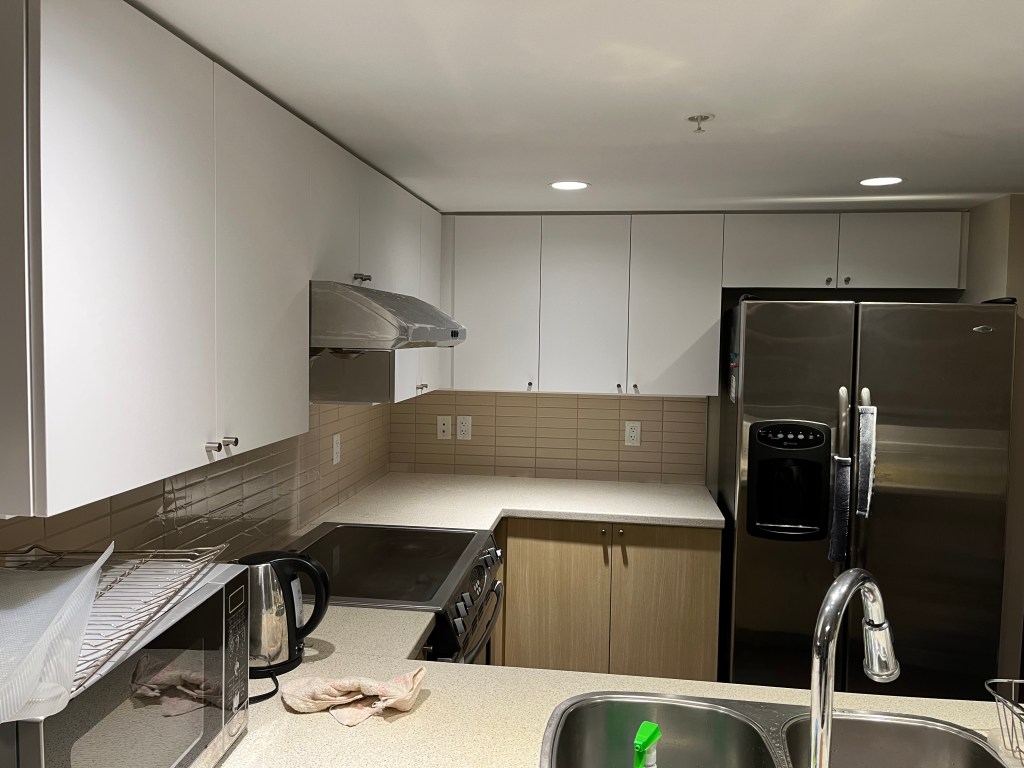
I directly compared a high-rise cabinet wrapping project with a commercial project.
The economic difference was structural rather than marginal.
Commercial work generated approximately 2× the daily profit.
Project Comparison In Canada
| Category | Apartment Cabinets | Commercial Column |
|---|---|---|
| Total Project Price | 2,520 CAD | 1,175 CAD |
| Cutting Pieces | 75 | 3 |
| Film Used | 15m (49.2 ft) | Provided by contractor |
| Material Cost | 650 CAD | 0 |
| Work Duration | 3 Days | 1 Day |
| Total Profit | 1,830 CAD | 1,175 CAD |
| Profit Per Day | 610 CAD | 1,175 CAD |
Interpretation
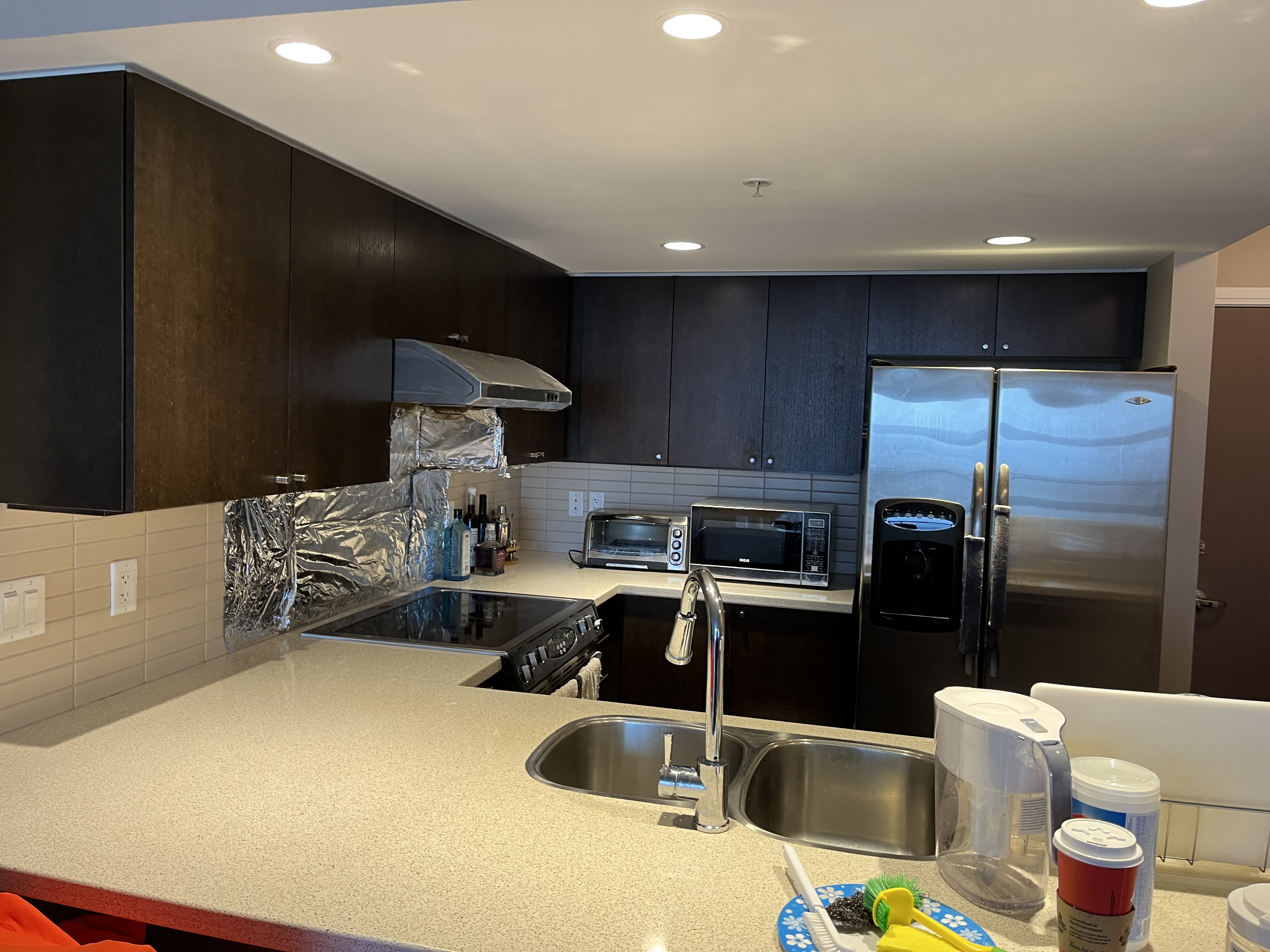
The apartment project required:
- 75 individual cuts
- Three full working days
- Installation within an occupied residential environment
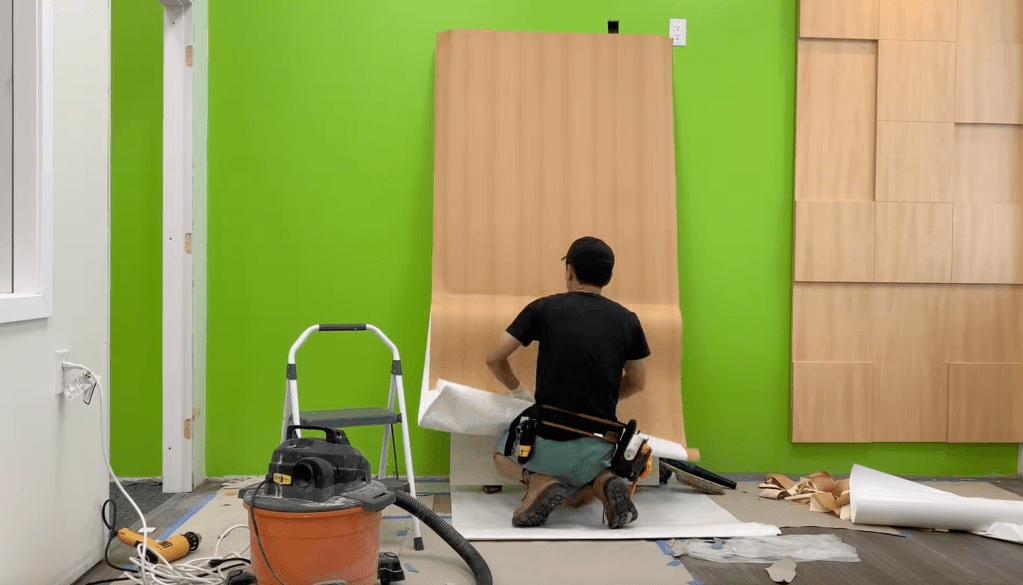
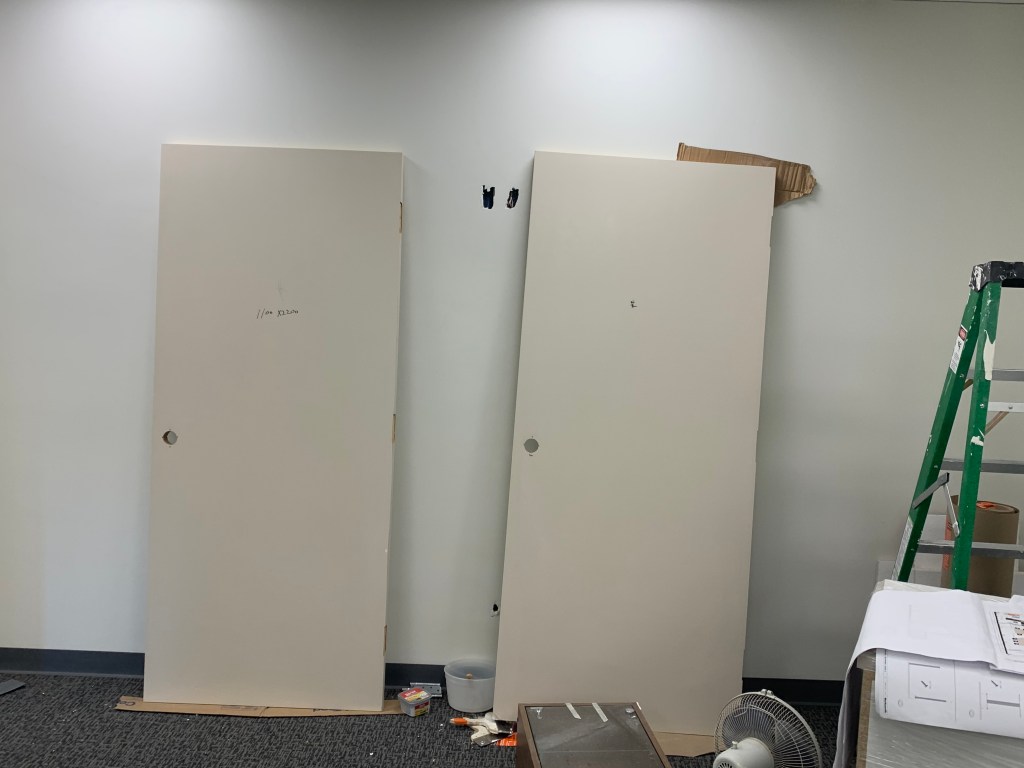
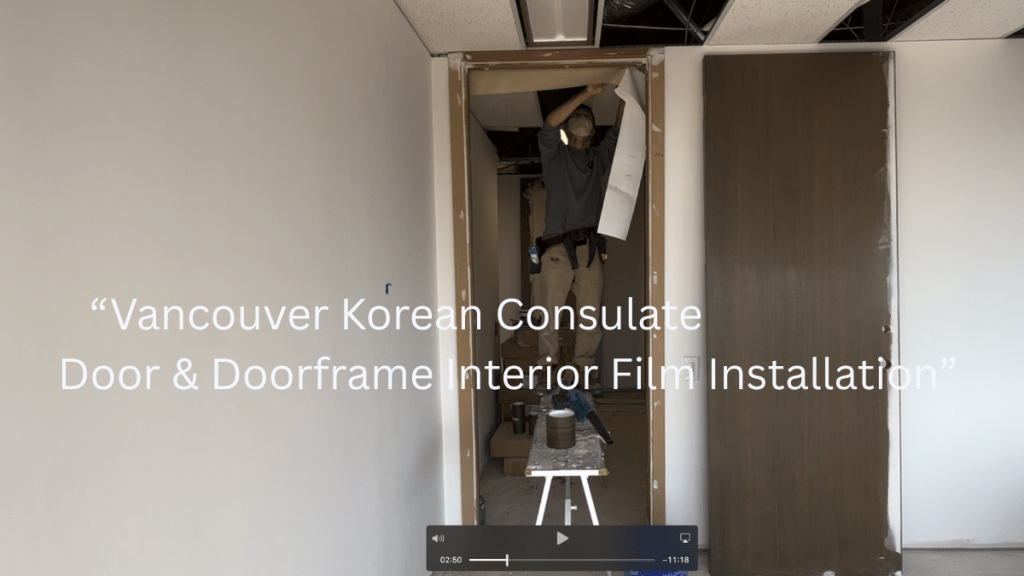
The commercial project required:
- Three cuts
- One working day
- Installation in an empty commercial space
Same material.
Same installer.
Comparable skill level.
Different economics.
5. The Core Variable: Installed Surface Area
Residential projects typically consume one to two rolls of film.
Commercial projects may use 10 to 20 rolls within a single contract.
Commercial environments allow long, continuous installation runs across walls, columns, and panels.
As a result, installed surface area per hour increases significantly.
Interior film installation is fundamentally a surface-area-driven business.
Revenue correlates directly with the amount of square meters installed.
This is not an opinion.
It is a structural characteristic of the business model.
6. Structural Limitations of Residential Work
Residential projects tend to involve:
- One-time customers
- Limited repeat volume
- Occupied working environments
- Restricted productivity
Cabinet wrapping can serve as skill development.
However, it does not inherently create scale.
7. Commercial Projects Accelerate Growth
Commercial work provides:
- Higher material volume
- Faster repetition
- Greater daily profit potential
- Accelerated technical development
If you have less than three years of experience, you are likely still in the early stages of professional development.
A practical benchmark:
If wrapping a standard door frame requires more than 35 minutes, further repetition is necessary.
Commercial environments provide that repetition.
Repetition improves efficiency.
Efficiency increases reliability.
Reliability strengthens earning potential.
Strategic Path for Long-Term Success
If the objective is to build a scalable interior film business, the progression typically follows this structure:
Commercial installation
→ Expansion of installation teams
→ Establishment of domestic film distribution
Commercial contracts create material volume.
Volume enables team growth.
Team growth creates operational leverage.
Operational leverage creates entry into distribution.
That is how a sustainable interior film business is built.
Not through isolated cabinet projects.
But through controlled commercial surface area.


 Seoul Interior Film