By looking at how Korea’s vinyl wrap industry evolved over the past 30 years,
you may be able to predict where the vinyl wrap market in your own country is heading next.
Markets tend to follow similar economic patterns.
About 30 years ago, the Korean architectural film market was dominated by expensive imported 3M film.
Then LG Hausys (now LX Hausys) began developing and manufacturing architectural film domestically.
As production scaled,
film prices dropped to nearly one-third of previous levels.
That price drop created demand.
As demand increased in residential markets
more installers entered the market,
installation techniques improved,
and vinyl wrap expanded from commercial spaces into residential interiors.
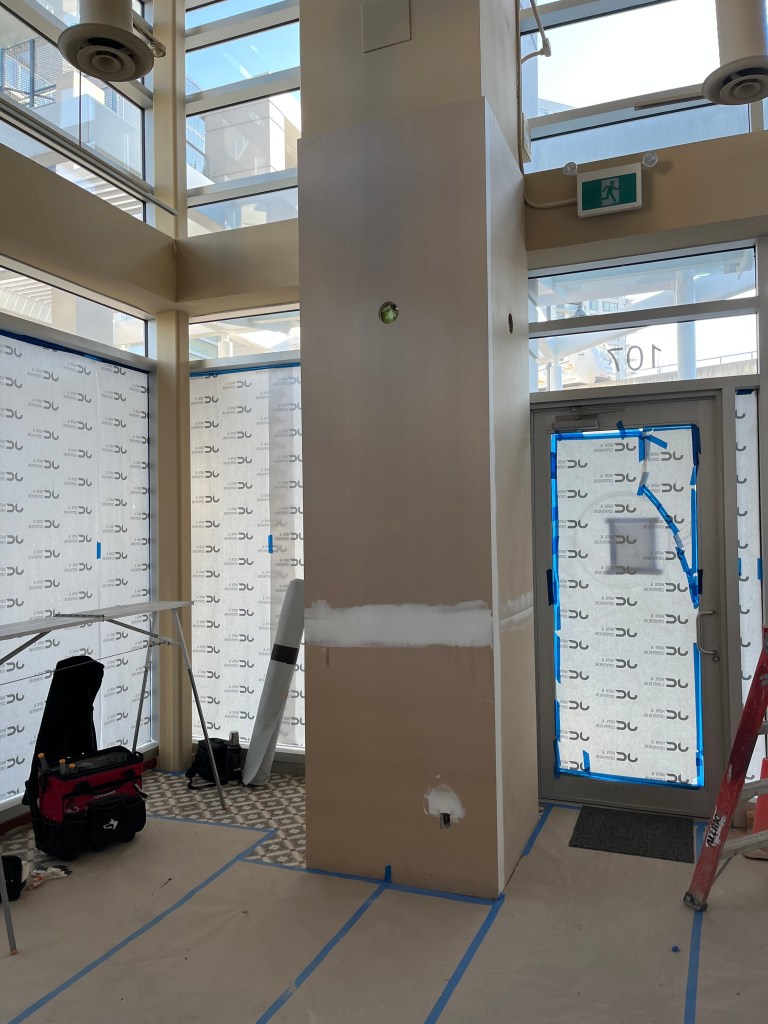
1. Vinyl Wrap in Korea Started in Commercial Spaces
In 1993, Korea began installing imported Japanese
3M DI-NOC architectural film.
At the time, it was a premium material.
So it was used mainly in commercial vinyl wrap projects,
not residential homes.
Applications included:
- columns
- feature walls
- selective wood finishes
In other words,
vinyl wrap started as a commercial finishing material.
2. Price Reduction Expanded Residential Demand
In 1997,
LG Hausys (now LX Hausys) began manufacturing
self-adhesive architectural film domestically.
Using competitively priced raw materials from LG Chem
and Korean manufacturing technology,
they introduced architectural film at far more affordable prices.
Lower film prices created residential demand.
Architectural film,
once limited mostly to commercial spaces,
began expanding into Korean residential interiors.
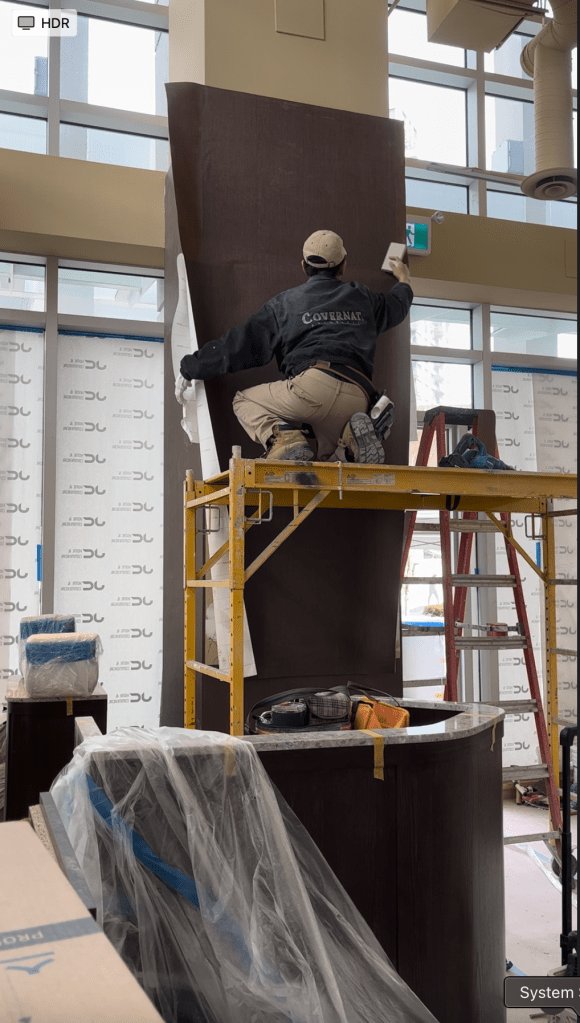
3. Residential Vinyl Wrap Is Common — But Low Margin
Why residential vinyl wrap in Korea is not highly profitable.
In Korea, residential vinyl wrap pricing is usually charged by area.
But most apartments are structurally similar.
Even a full 30-pyeong apartment renovation
(about 1,070 sq ft)
typically uses only about two rolls of film.
That creates a problem:

- Commercial vs Residential Vinyl Wrap — Real Profit Comparison (Canada)
I directly compared:
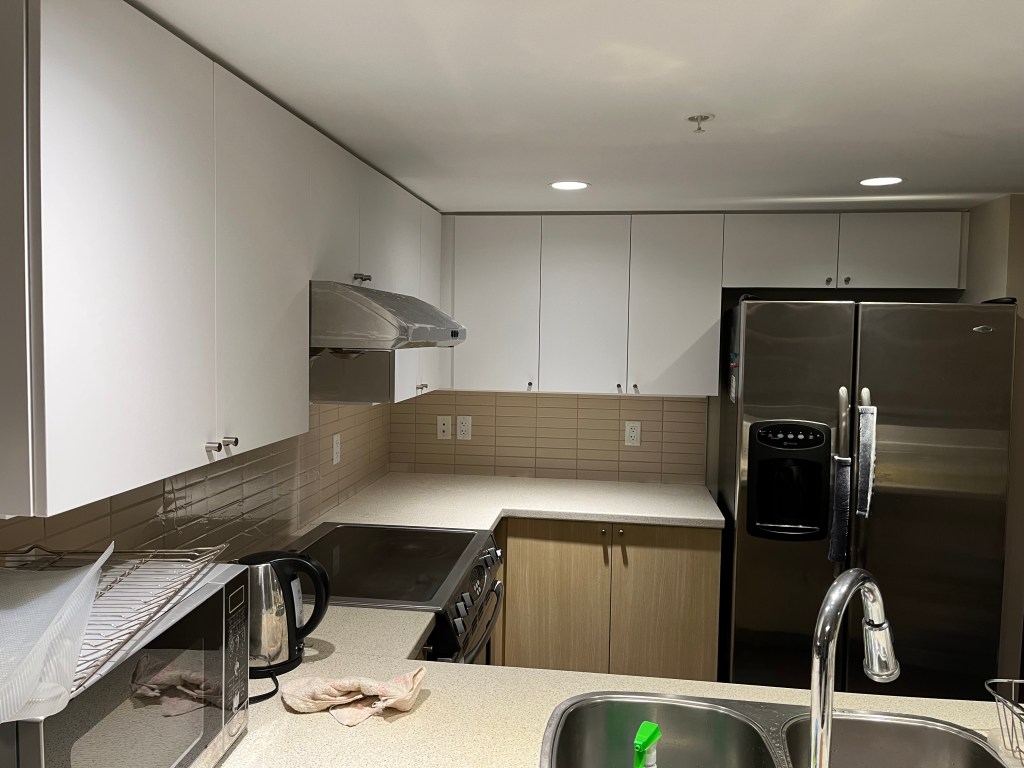
Residential kitchen cabinet vinyl wrap
vs
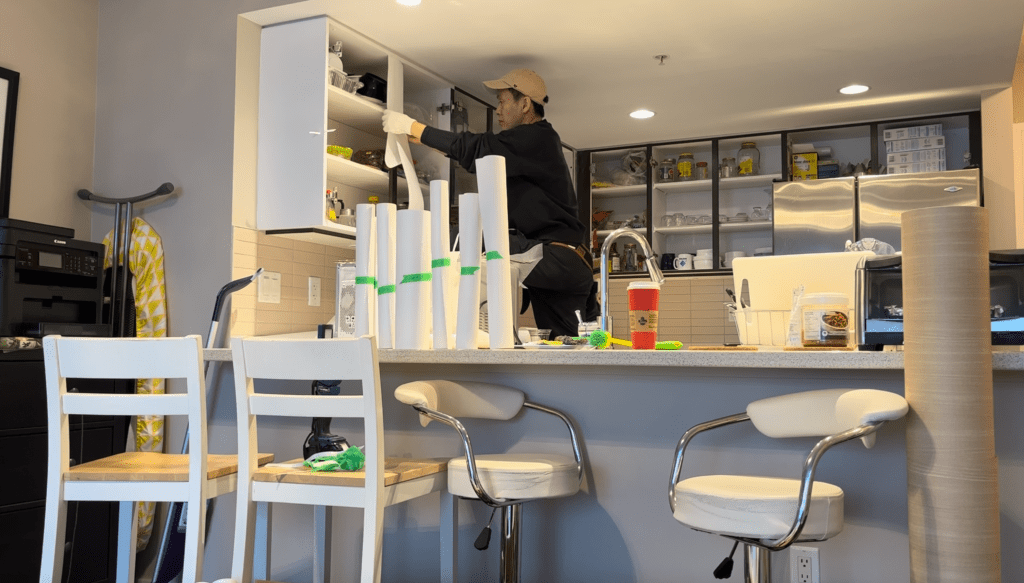
Commercial vinyl wrap projects
(columns / large surfaces)
Project Comparison
| Category | Residential Cabinet Wrap | Commercial Wrap |
|---|---|---|
| Total Price | $2,520 CAD | $1,175 CAD |
| Pieces | 75 | 3 |
| Work Time | 3 days | 1 day |
| Profit | $1,830 CAD | $1,175 CAD |
| Profit Per Day | $610 | $1,175 |
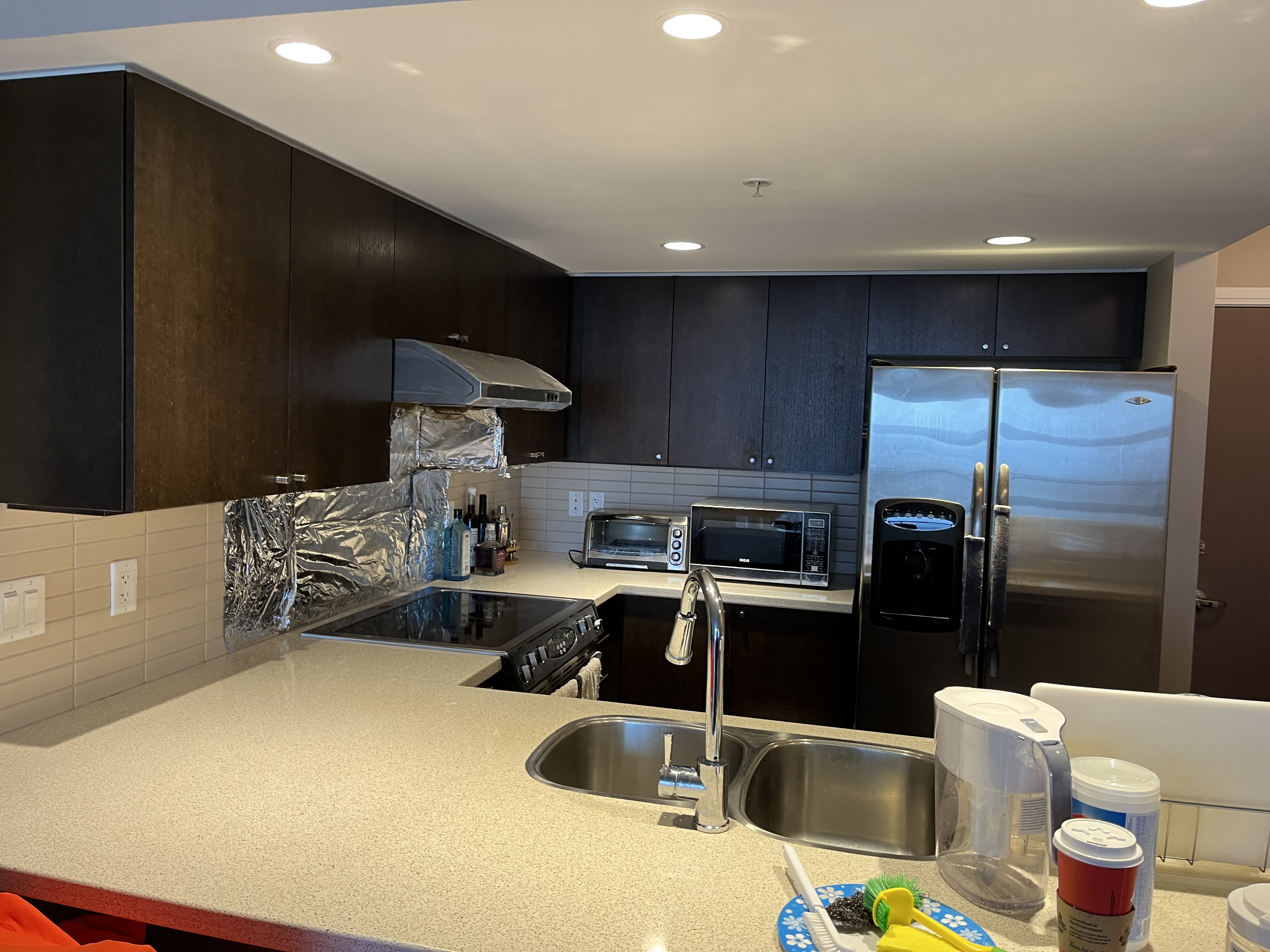
75 residential cabinet pieces vs 3 large commercial sections —
yet commercial vinyl wrap generated over 2× higher daily profit.
5. The Real Game: Surface Area
Vinyl wrap is a surface-area business.
Residential:
- 1–2 rolls
- limited output
Commercial:
- 10–20 rolls per project
- large continuous surfaces
More surface per hour = more revenue.
This is structural.
Not opinion.
If you were starting a vinyl wrap business today,
wouldn’t it make more sense
to target commercial projects first
instead of residential work?
The numbers,
profit structure,
and scalability
all point in the same direction.


Leave a comment