Author: geunjong choi

  • **Where Should a Beginner Start?

    Commercial Sites vs. Residential Sites**

    Following Mr. Kim’s advice,
    I applied to a commercial-focused interior film crew.

    The reason was simple.

    Commercial sites use at least three to five times more film than residential sites.
    That means if you start in commercial work,
    your growth speed is at least twice as fast.

    Residential jobs are mostly repetitive:

    • door frames
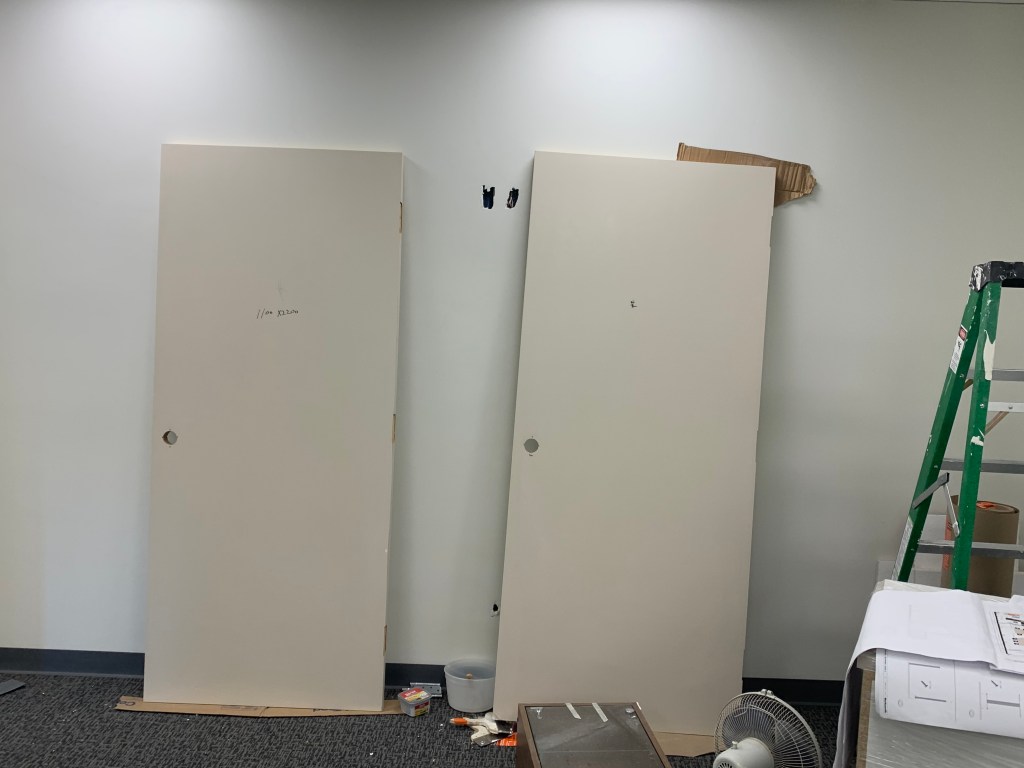
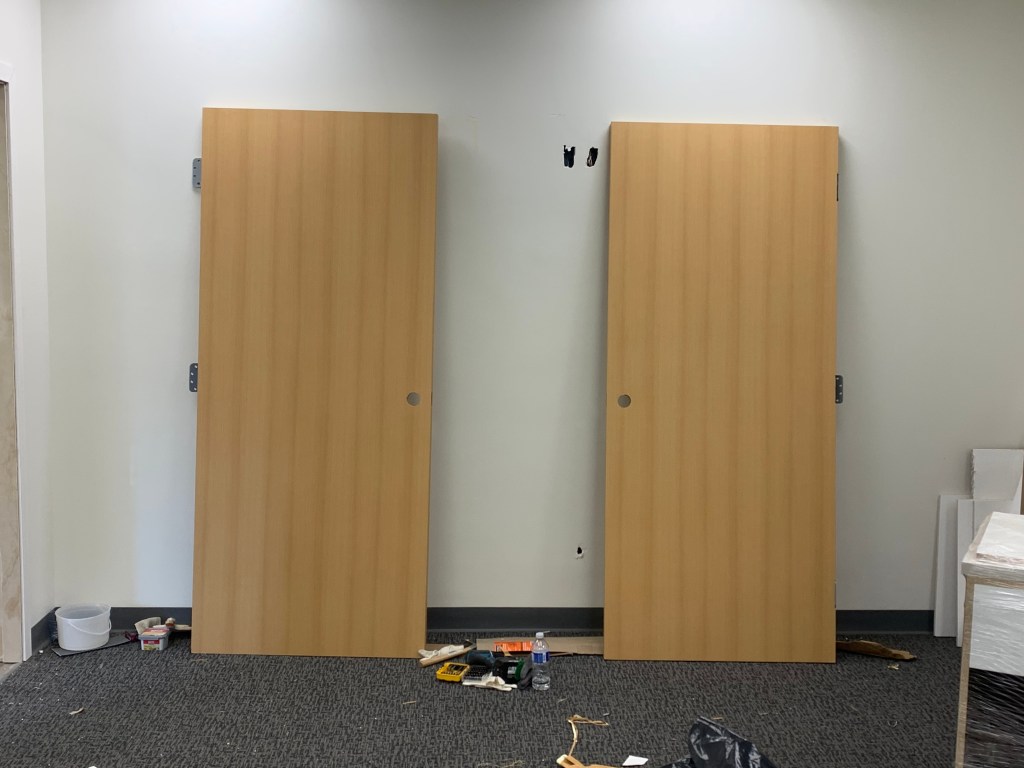
    • doors
    • window frames
    • built-in closets

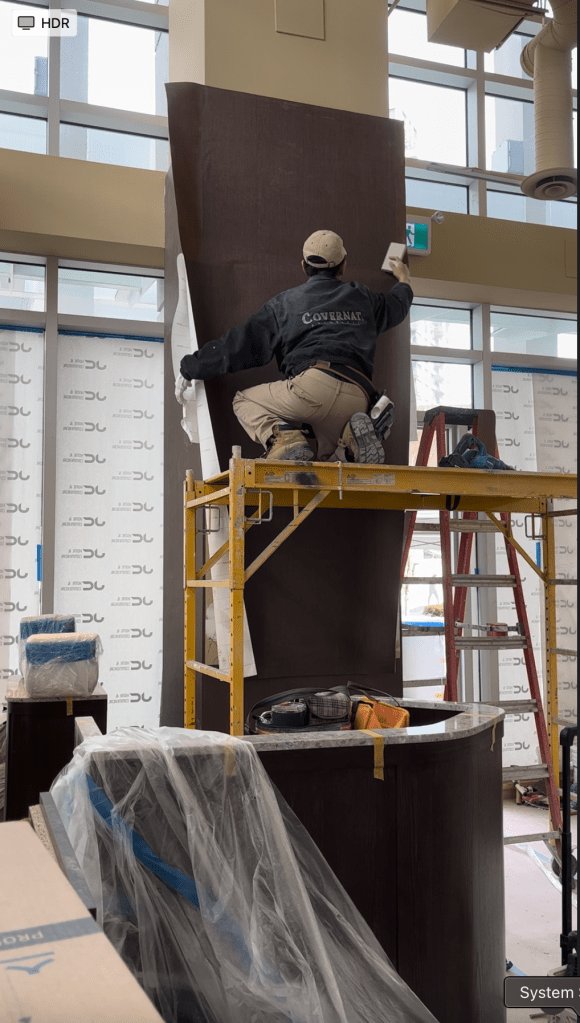
    Commercial sites are different.

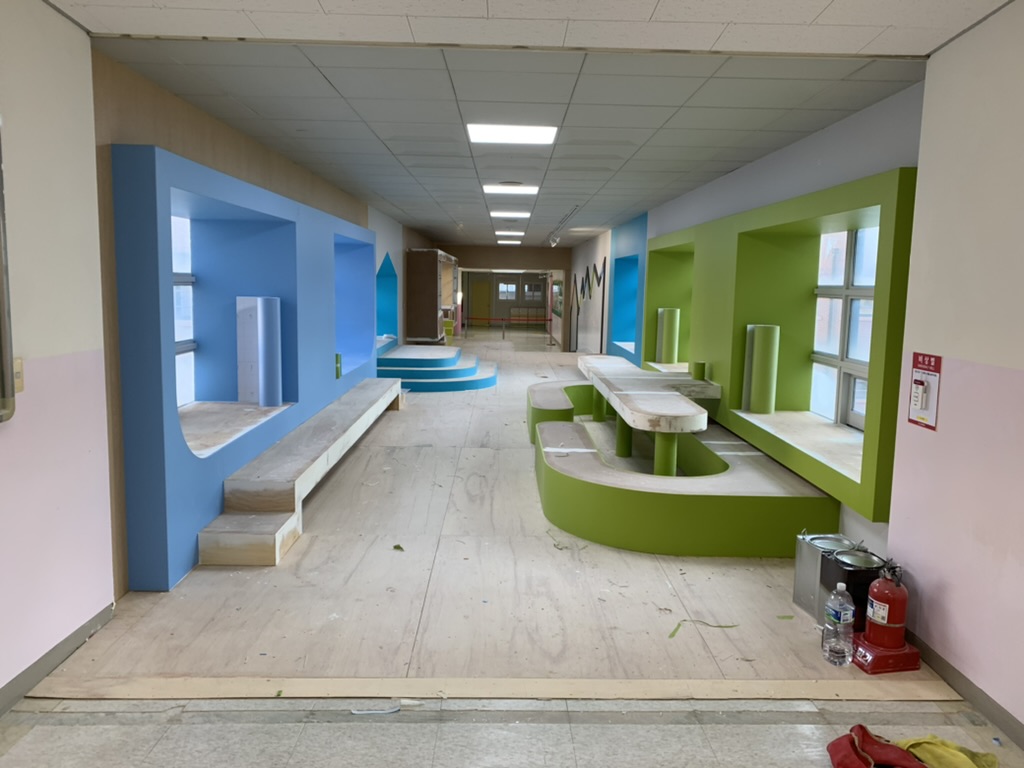
    Custom-built furniture.
    Curved structures.
    Large aluminum composite panels (ACP).

    The scale alone puts them
    in a completely different league.

    Mr. Kim explained it this way:

    “If you want to build skill fast as a beginner,
    commercial sites are the only answer.
    The more large sheets of film you handle,
    the faster your hands level up.”

    I found the crew through an online film-installer community
    and joined their team.

    The pay was 80,000 KRW per day.
    Clock in at 7:30 a.m., clock out at 4:30 p.m.

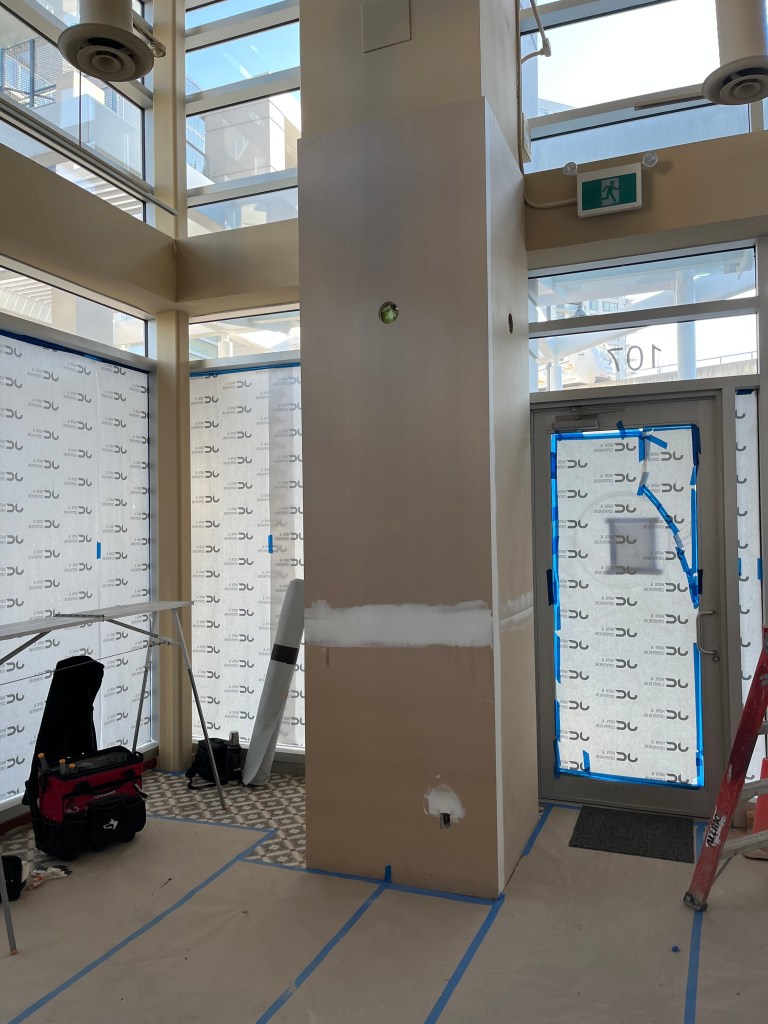
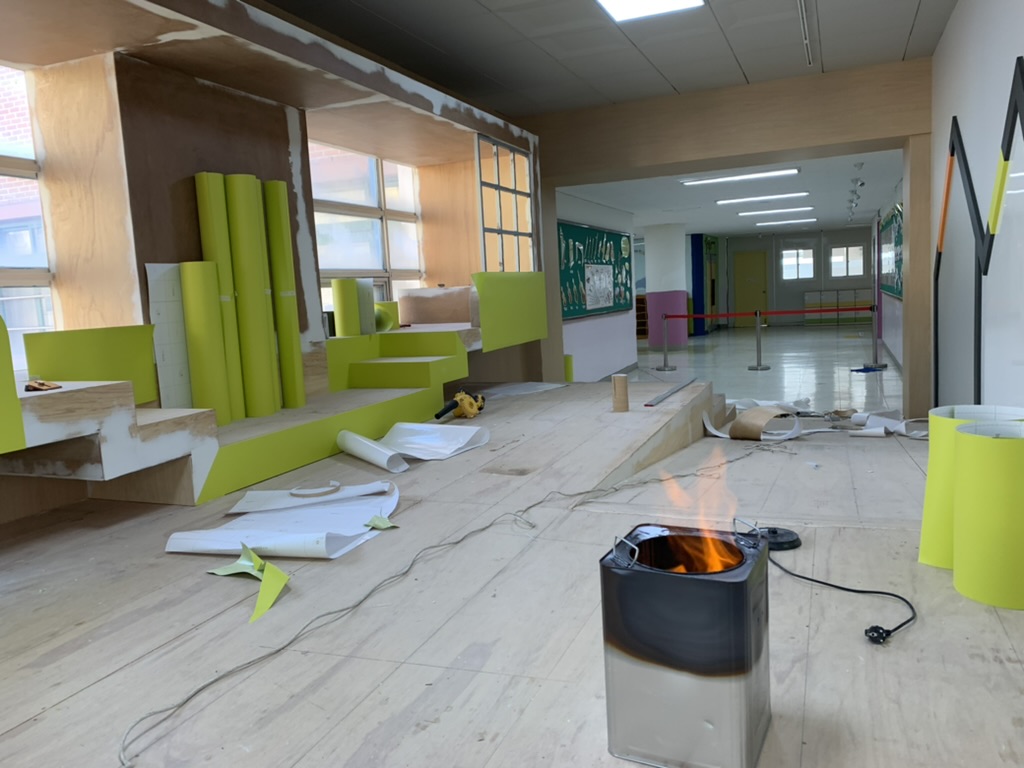
    My first assignment was a school project—a commercial site.

    And on day one, I realized something immediately.

    What I imagined film installation would be,
    and what commercial film work actually is,
    were two completely different worlds.

    I had assumed film work meant
    wrapping cabinets or doors.

    Reality didn’t even come close.

    On commercial sites,
    anyone with less than three years of experience
    isn’t allowed to touch the film.

    So for the first three months,
    I didn’t install a single sheet.

    Not one.

    Every day consisted of just this:

    • putty
    • sanding
    • primer
    • site cleanup

    Prep work.
    Nothing but prep work.

    The crew owner—
    a film installer with 23 years of experience—told me:

    “Film work is ninety percent prep.
    If you can’t prep properly,
    you’ll never install film properly.”

    He was right.

    Film installation isn’t about
    “sticking it on cleanly.”

    It’s about preparing the surface
    so installation is even possible.

    At first, I hated it.

    Why was I spending all day on prep?
    When would I finally get to install?

    But after three months, something changed.

    Every time I was sent to a new site,
    I heard the same comment:

    “Your prep work is amazing .”

    That’s when it hit me.

    I wasn’t a film installer yet.

    I had become a prep-work technician.

    And on real job sites,
    that skill is non-negotiable.

    Three months later,
    I left that crew.

    Because now—
    it was finally time
    to start installing film.

  • Seoul Interior Film Academy: What It Really Taught Me

    As soon as I returned to Korea,
    I enrolled in the Zero Interior Film Academy in Seoul.

    The reason was simple.

    “Before jumping into real job sites,
    at least learn the fundamentals.”

    The program lasted five weeks.
    The tuition fee was 1.5 million KRW.

    But in Korea,
    interior film installation is classified as a government-supported technical skill.
    If you meet the requirements,
    the entire tuition is refunded.

    In other words,
    for Koreans, this film academy is essentially free.

    (If you’re an international reader,
    this is just for reference—
    foreigners are realistically not eligible for this program.)

    The structure of the class was straightforward.

    Theory?
    Barely two hours at the beginning.

    The remaining five weeks were pure hands-on training.

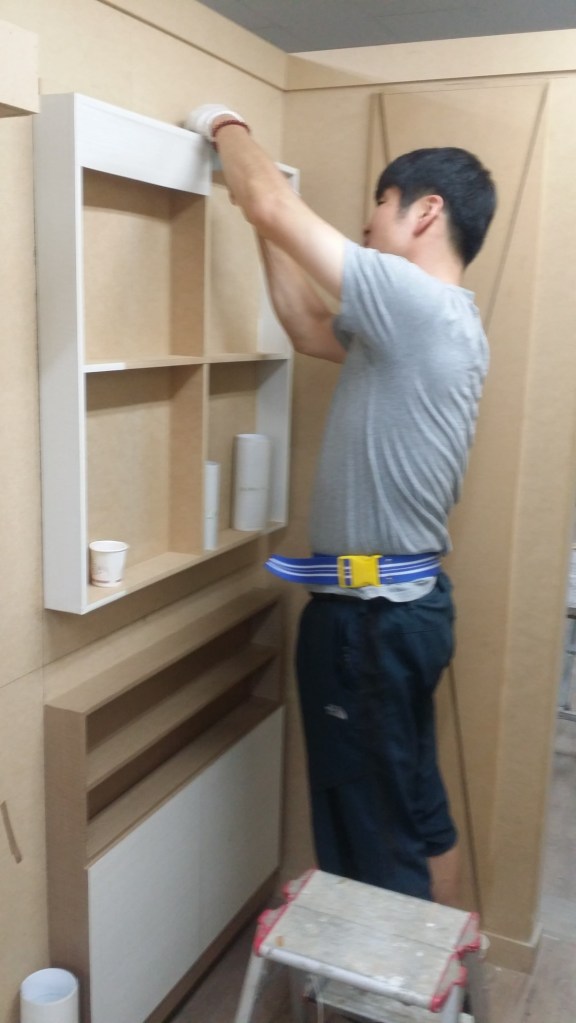
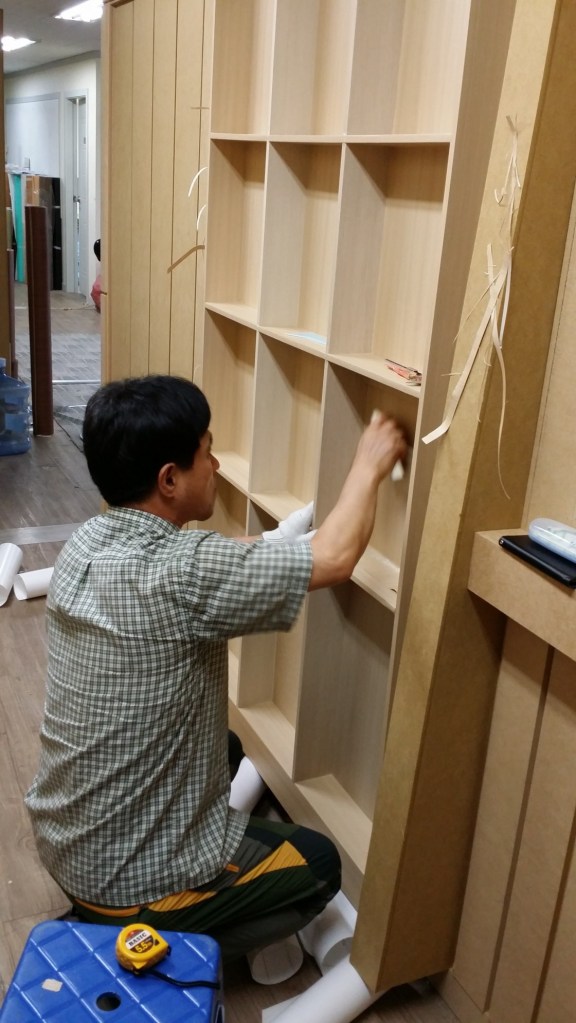
    • Door frame installation
    • Window frame installation
    • Flat panel (alpan) installation
    • Furniture wrapping

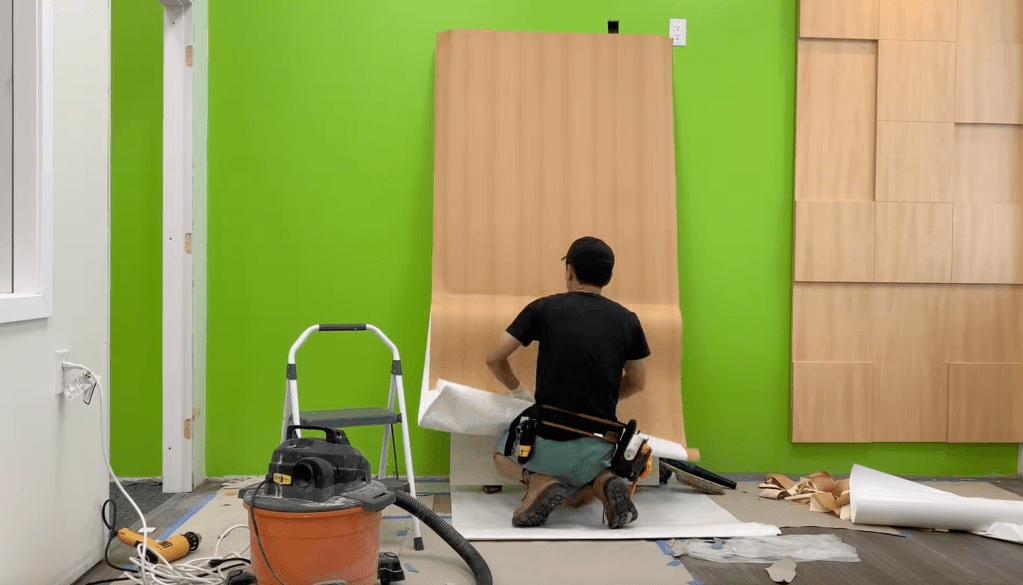
    I held film in my hands all day—
    stick it, peel it off,
    and stick it again.

    Around the third week,
    I fell into a dangerous kind of confidence.

    “At this level,
    wouldn’t I already be in the top 10%
    of film installers in Canada?”

    The reason felt obvious at the time.

    I believed I was receiving
    the world’s best interior film techniques,
    compressed into a short, intensive course.

    The instructor had over 10 years of field experience.
    During class, he said:

    “Korea’s interior film industry has about 30 years of history.
    There are over 30 domestic film brands alone.

    In the early days, film was mostly used in commercial spaces.
    But today, with better pricing, durability, and design,
    it’s become a mandatory process even in residential interiors.”

    Then he added:

    “The most widely used films are
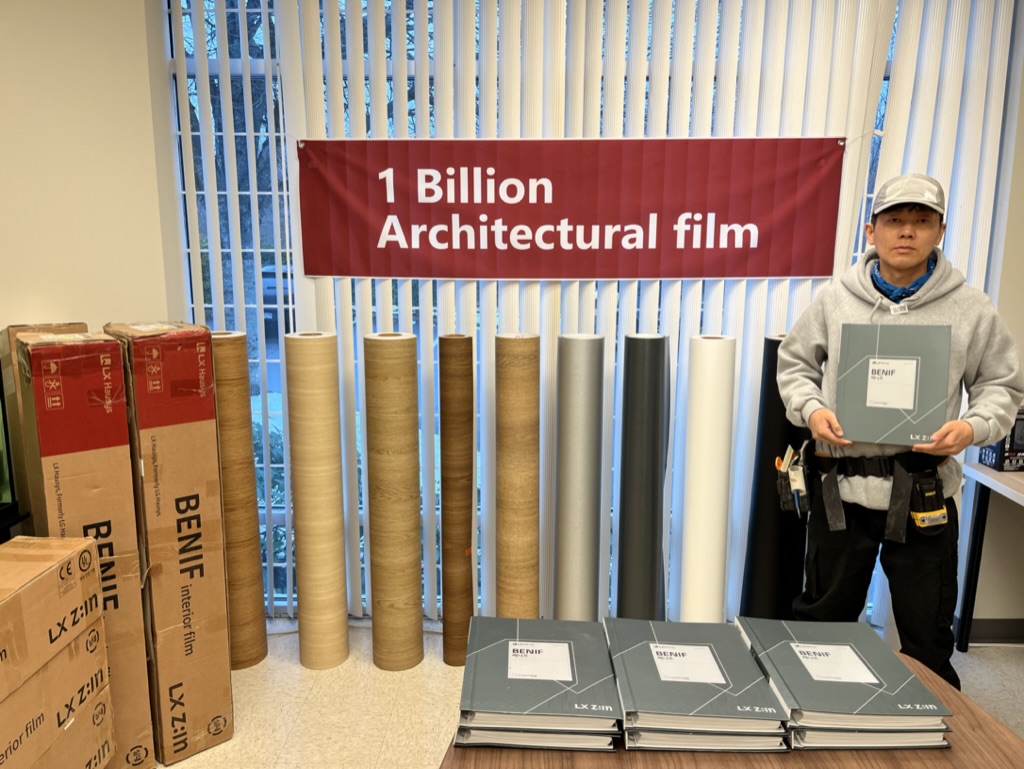
    LX Interior Film and Hyundai Bodaq.”

    On the final day, he said this:

    “If you work seriously on real job sites for just one year,
    you’ll be recognized as a professional installer.”

    Listening to that,
    my mind was already racing ahead.

    “So now I just go back to Canada
    and make $1,000 a day.”

    But reality intervened.

    I had already signed
    a one-year lease in Seoul.

    Going back immediately
    wasn’t even an option.

    So I followed the advice of my friend Mr. Kim,
    a general contractor,
    and jumped straight into real interior film job sites.

    That decision
    would change everything.

  • Where Can You Learn Interior Film?

    Is YouTube Self-Study Really Possible?

    I wanted to start making $1,000 a day installing interior film—
    as soon as possible.

    To practice,
    I bought $30 worth of wrapping film on Amazon.
    I watched Korean YouTube channels
    and started wrapping cabinet doors myself.

    After practicing two or three times,
    it didn’t feel that hard.

    That’s when the thought hit me:

    “Interior film installation isn’t a big deal.
    It’s basically just putting stickers on cabinets.”

    So I convinced myself that
    I could learn interior film installation in Canada
    just by watching Korean YouTube videos.

    But that was a huge mistake.

    If you think about it logically, the answer is obvious.
    No customer is going to pay $1,000 a day
    for work that anyone can learn from YouTube.


    Around that time,
    a friend came to mind—Mr. Kim,
    a general contractor in Korea with 15 years of field experience.
    I called him.

    “Hey, you know interior film, right?
    In Canada, installers make $1,000 a day.
    I’ve been practicing cabinet wrapping with YouTube videos,
    and honestly, it doesn’t seem like a big deal.”

    The moment he heard that,
    Mr. Kim cut me off.

    “That level of cabinet wrapping?
    Even I can do that—and I’m a general contractor.
    Anyone can do basic cabinet wrapping.

    Learning film installation from YouTube?
    I’ll say this with 100% certainty
    you will never become a real film installer that way.

    If you actually want to become a professional,
    you need to come to Korea
    and spend at least one year
    working under someone with 20 years of experience
    ,
    starting from the bottom.

    That’s the fastest path.
    And the only accurate one.”

    Then he added one last line.

    “If you walk onto a real job site with YouTube skills,
    you’ll embarrass yourself—
    and no one will ever hire you again.”


    After the call,
    my head was a mess.

    Just the day before,
    I was fully convinced that
    I could learn film installation in Canada
    through YouTube alone.

    But I couldn’t brush off
    the advice of someone who had survived
    15 years in the field.

    After a week of thinking it through,
    I decided to listen to Mr. Kim.

    One month later,
    I packed up my rental house, sold my car,
    shut down my business in Canada,
    and boarded a flight back to Korea.

  • How I Met the Guy Who Made $8,000 a Month Working Five Days

    And How It Changed Everything”

    I first met JEFF — the guy who worked five days a month and made eight grand —
    when I went to get my car tinted.

    I searched the Korean community site for the cheapest tinting service I could find,
    and the owner of that listing turned out to be JEFF.

    When I called him, I learned he didn’t even have an office.
    Which explained the price: $250 for a full windshield tint.

    The job was done in his driveway.
    And honestly?
    The quality matched the price — “okay,” nothing more.

    After he finished, we ended up standing outside his house,
    talking for almost two hours about life in Canada.

    That’s when JEFF dropped this on me:

    “Sushi work? That’s poverty.
    Do what everyone else does, and you’ll earn what everyone else earns — nothing.
    Canada is all about skilled trades.
    I work five days a month doing interior film and make eight grand.
    Tinting is just filler work for easy jobs.”

    Inside, I rolled my eyes.

    “Right… here we go again.
    Another Korean dude in Canada talking nonsense.
    Five days, eight thousand dollars? Come on…”

    As we talked, evening rolled in.
    Then JEFF said:

    “Hey, there’s a jjajangmyeon place here that tastes better than Korea.
    If you’re free, dinner’s on me.”

    A tinting guy offering a $13 meal
    to a customer who paid $250?

    Suspicious.
    But Korean-style jjajangmyeon is my weakness — I couldn’t say no.

    And the crazy part?

    It really was better than jjajangmyeon in Korea.
    Like… 1.5× better.

    That one bowl broke through my guard.
    Not because of the food —
    but because it didn’t match the “liar” stereotype I had in my head.

    There’s something surreal about eating your home country’s food,
    but better, in a foreign land.
    It hits you like a small existential slap:
    “Damn… maybe I don’t know as much as I think I do.”

    That day was when I stopped seeing JEFF as a scammer.

    After that, we started hanging out —
    hiking once a week, grabbing food, just talking about life.


    Then came August 2019.

    My move-out date didn’t line up with my move-in date,
    and I suddenly had nowhere to stay.

    I asked JEFF for help, and he let me crash in his living room.
    I ended up living there for a month.

    And during that month, I witnessed something that shocked me.

    JEFF really did work only five days a month.
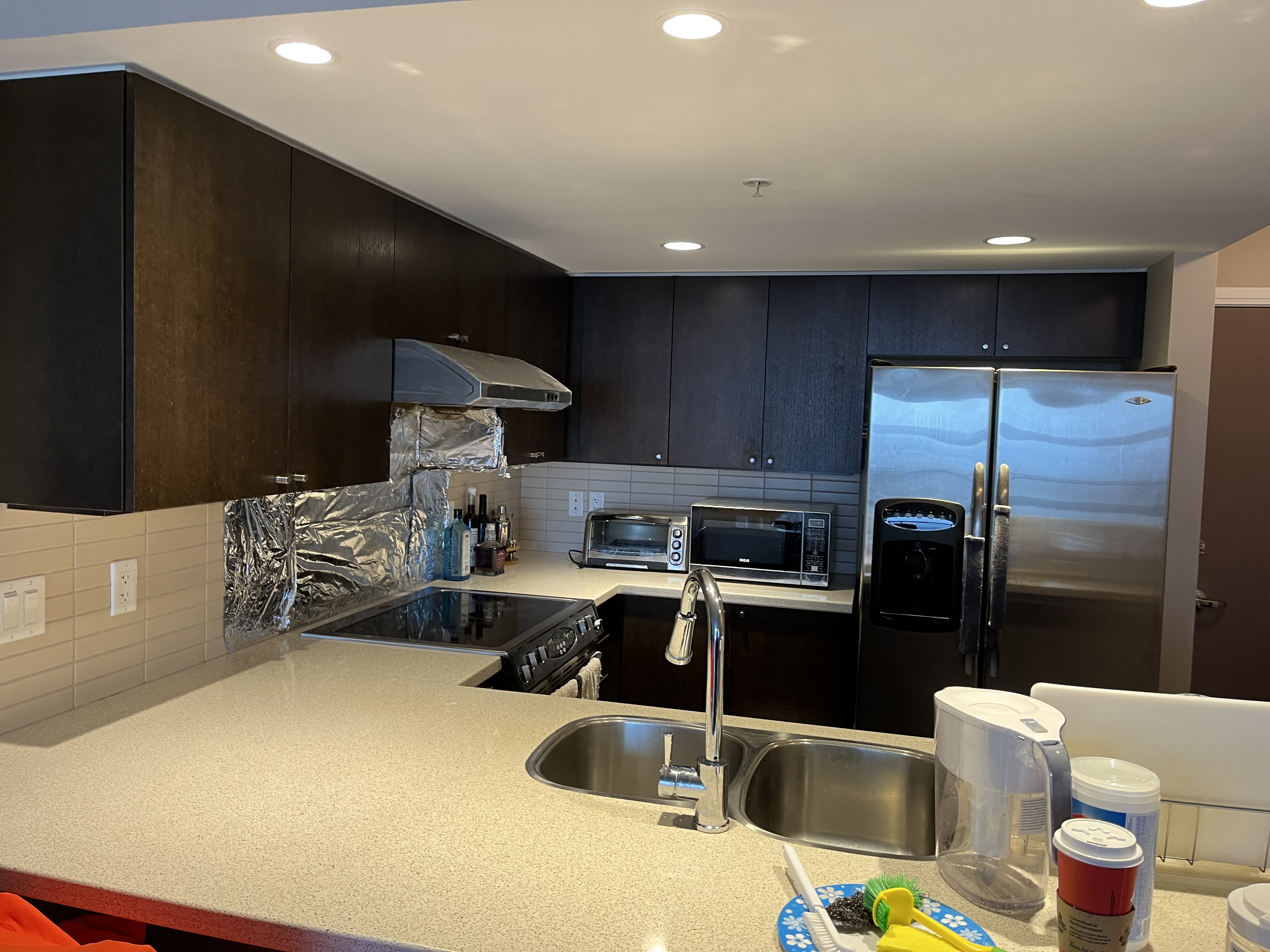
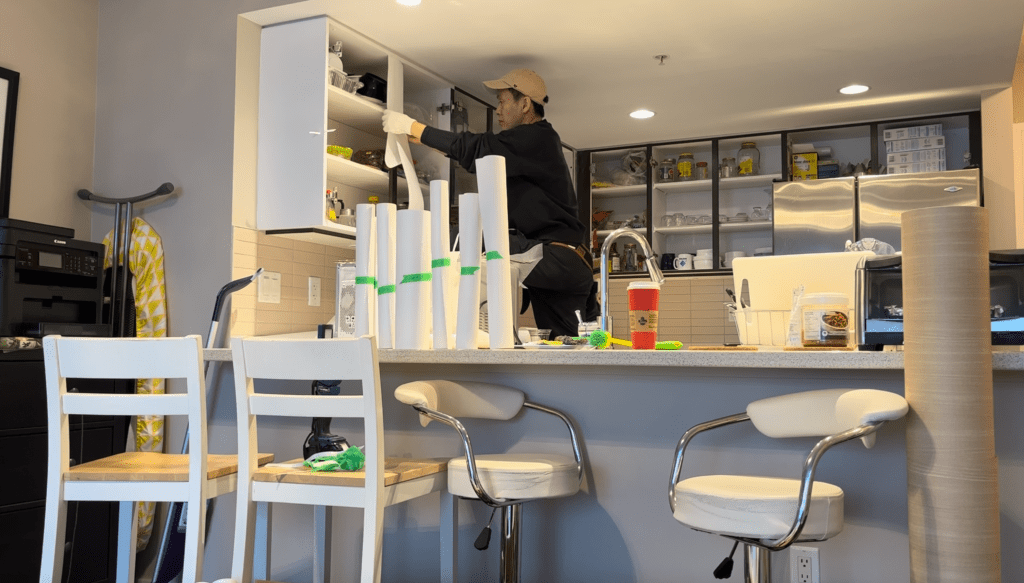
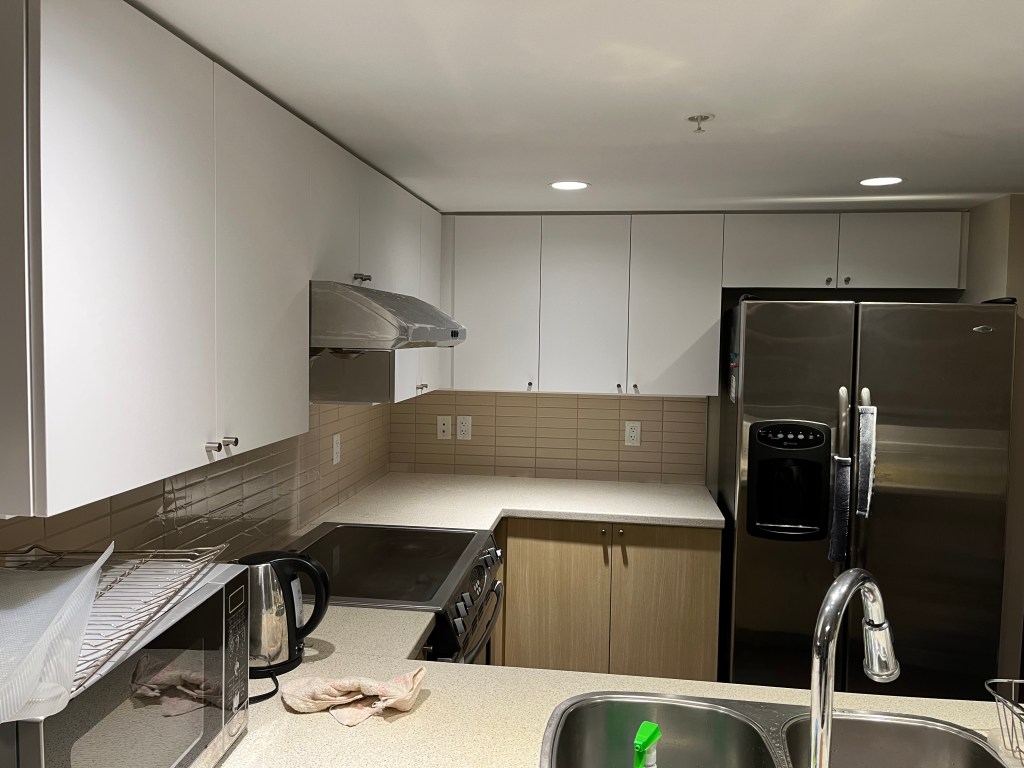
    His main work was kitchen cabinet refinishing using interior film.

    Here’s what clients paid:


    One-bedroom apartments

    15–20 cabinet doors

    • $2,500–$3,000
    • 1–2 days of work

    Regular houses

    25+ cabinet doors

    • $4,500–$5,500
    • 4–5 days of work

    Material cost?
    $600–$900, including film + shipping.

    And the Canadian system?
    Clients paid 50% upfront.

    Meaning:

    • Film cost covered
    • Shipping covered
    • Partial profit secured
    • Zero risk of losing money

    It was almost impossible not to profit.

    (Meanwhile, back in Korea?
    10–20% of interior jobs don’t get paid.
    Everything is post-paid.
    Clients ghost.
    Companies close, reopen under new names, and avoid any consequences.
    It’s chaos.)

    I punched numbers into my phone.

    “…Wait. This really is over $1,000 a day?”

    During that month, JEFF and I went to five estimate visits together.

    He told me he once refinished an entire motel in Alberta
    and made $30,000 in a single month.

    And the thing is?

    He wasn’t exaggerating.
    This was how he had lived for ten years
    working five days a month, taking home eight grand.

    He explained it simply:

    “Labor is expensive here.
    Replacing kitchen cabinets costs 5–8× more than film wrapping.
    That’s why Korean interior film dominates.
    It’s unbeatable value.”

    It felt like someone hit me in the head with a hammer.
    A new world opened up — one I didn’t even know existed.

    And in late August 2019, I made my decision.

    I wanted to make $1,000 a day too.
    So I decided to learn interior film.

  • From $15/Hour Sushi Cook to $1,500/Day Interior film Installer

    And why I walked away the moment I finally “made it.”

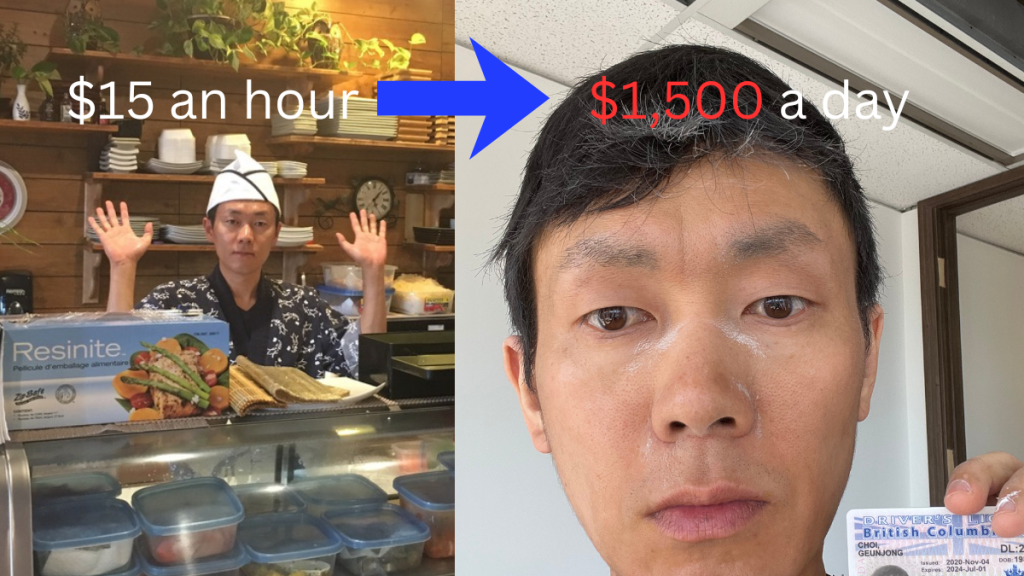
    “Before-and-after journey of an interior film installer: from a $15/hour sushi cook in Vancouver to earning $1,500 a day installing LX Interior Film and Hyundae Bodaq interior film, before a severe skin condition forced a return to Korea. Used in a story about interior film installation, training, and wholesale demand in Canada and Korea.”
    From earning $15 an hour at a sushi bar to $1,500 a day installing interior film in Vancouver — this photo shows exactly where my journey began.

    Three days before flying back to Korea,
    I was standing inside the Vancouver Korean Consulate —
    my final interior-film job in Canada.

    Two days of work.
    Over $3,000 in labor fees.

    Not bad for a guy who, just two years earlier,
    was a $15-an-hour sushi cook in a cramped Vancouver kitchen.
    Back then, I never imagined I’d reach a point where
    I could charge $1,500 a day for my time.

    I spent a full year in Korea learning interior-film installation.
    Then I came back to Canada and started taking on
    both sales and installation jobs.

    One year into my interior-film business in Canada —
    doing both sales and installation —
    contractors were messaging me nonstop:
    “Can you do a film job next week?”
    Two to three inquiries every single day.

    Of course, the first six months were rough.
    I was barely making $500 a day.
    But after a year, whenever I stepped onto a job site,
    I wouldn’t leave for less than $1,000 a day.

    And yet—
    despite all that momentum,
    despite finally breaking into a $1K-a-day skill,
    I’m throwing it all away tomorrow
    and flying back to Korea.

    Why?
    Because something insane happened to my face.
    My Canadian friends literally called me “the Korean zombie.”
    I haven’t looked in the mirror for six months.

    When your face collapses like that,
    the money doesn’t matter anymore.
    A thousand bucks a day?
    Who cares. Try living with a face that’s falling apart.

    If you read Part 2,
    you’ll understand exactly why
    I walked away from all this and went home.

    And listen—
    you don’t have to believe any of this.
    Honestly, I wouldn’t believe it either
    if I hadn’t seen it with my own eyes.

    I didn’t believe a $1,000 day was even possible
    until I met JEFF
    a guy making over $8,000 a month
    working just five days.

  • Hello World!

    Welcome to WordPress! This is your first post. Edit or delete it to take the first step in your blogging journey.