Tag: lx

  • Seoul Interior Film Academy: What It Really Taught Me

    As soon as I returned to Korea,
    I enrolled in the Zero Interior Film Academy in Seoul.

    The reason was simple.
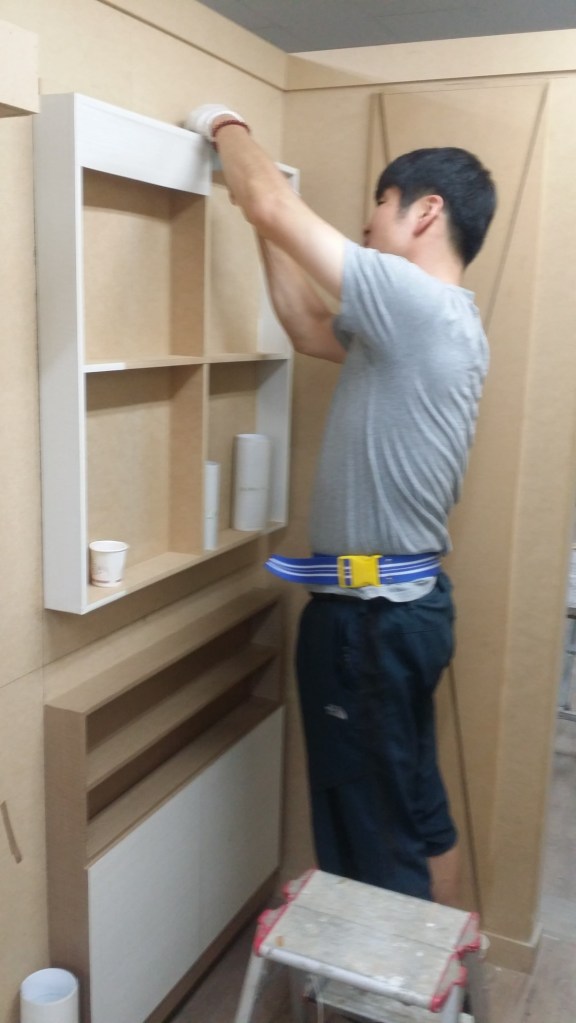
    “Before jumping into real job sites,
    at least learn the fundamentals.”

    The program lasted five weeks.
    The tuition fee was 1.5 million KRW.

    But in Korea,
    interior film installation is classified as a government-supported technical skill.
    If you meet the requirements,
    the entire tuition is refunded.

    In other words,
    for Koreans, this film academy is essentially free.

    (If you’re an international reader,
    this is just for reference—
    foreigners are realistically not eligible for this program.)

    The structure of the class was straightforward.

    Theory?
    Barely two hours at the beginning.

    The remaining five weeks were pure hands-on training.

    • Door frame installation
    • Window frame installation
    • Flat panel (alpan) installation
    • Furniture wrapping

    I held film in my hands all day—
    stick it, peel it off,
    and stick it again.

    Around the third week,
    I fell into a dangerous kind of confidence.

    “At this level,
    wouldn’t I already be in the top 10%
    of film installers in Canada?”

    The reason felt obvious at the time.
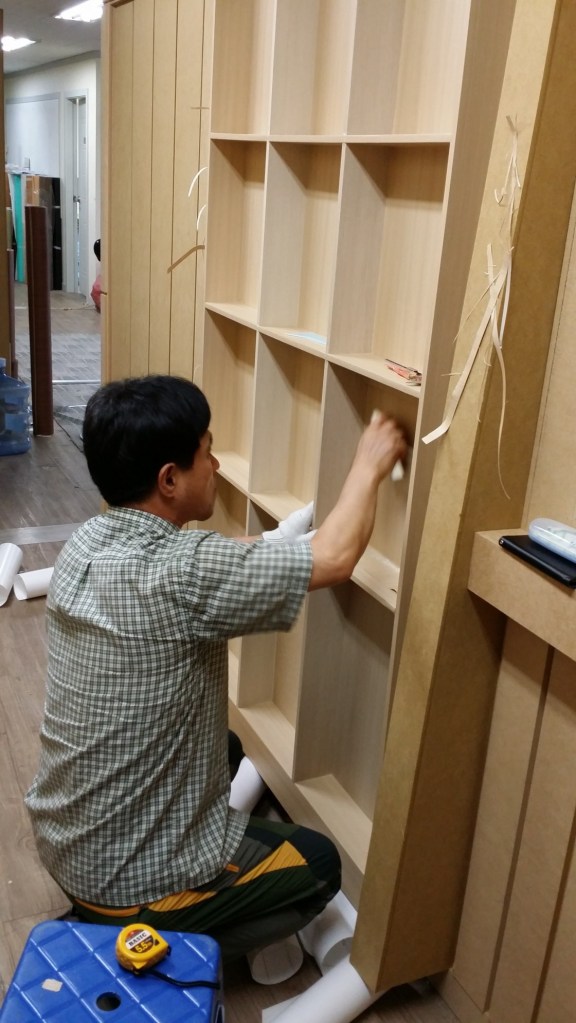
    I believed I was receiving
    the world’s best interior film techniques,
    compressed into a short, intensive course.

    The instructor had over 10 years of field experience.
    During class, he said:

    “Korea’s interior film industry has about 30 years of history.
    There are over 30 domestic film brands alone.

    In the early days, film was mostly used in commercial spaces.
    But today, with better pricing, durability, and design,
    it’s become a mandatory process even in residential interiors.”

    Then he added:

    “The most widely used films are
    LX Interior Film and Hyundai Bodaq.”

    On the final day, he said this:

    “If you work seriously on real job sites for just one year,
    you’ll be recognized as a professional installer.”

    Listening to that,
    my mind was already racing ahead.

    “So now I just go back to Canada
    and make $1,000 a day.”

    But reality intervened.

    I had already signed
    a one-year lease in Seoul.

    Going back immediately
    wasn’t even an option.

    So I followed the advice of my friend Mr. Kim,
    a general contractor,
    and jumped straight into real interior film job sites.

    That decision
    would change everything.

  • Where Can You Learn Interior Film?

    Is YouTube Self-Study Really Possible?

    I wanted to start making $1,000 a day installing interior film—
    as soon as possible.

    To practice,
    I bought $30 worth of wrapping film on Amazon.
    I watched Korean YouTube channels
    and started wrapping cabinet doors myself.

    After practicing two or three times,
    it didn’t feel that hard.

    That’s when the thought hit me:

    “Interior film installation isn’t a big deal.
    It’s basically just putting stickers on cabinets.”

    So I convinced myself that
    I could learn interior film installation in Canada
    just by watching Korean YouTube videos.

    But that was a huge mistake.

    If you think about it logically, the answer is obvious.
    No customer is going to pay $1,000 a day
    for work that anyone can learn from YouTube.


    Around that time,
    a friend came to mind—Mr. Kim,
    a general contractor in Korea with 15 years of field experience.
    I called him.

    “Hey, you know interior film, right?
    In Canada, installers make $1,000 a day.
    I’ve been practicing cabinet wrapping with YouTube videos,
    and honestly, it doesn’t seem like a big deal.”

    The moment he heard that,
    Mr. Kim cut me off.

    “That level of cabinet wrapping?
    Even I can do that—and I’m a general contractor.
    Anyone can do basic cabinet wrapping.

    Learning film installation from YouTube?
    I’ll say this with 100% certainty
    you will never become a real film installer that way.

    If you actually want to become a professional,
    you need to come to Korea
    and spend at least one year
    working under someone with 20 years of experience
    ,
    starting from the bottom.

    That’s the fastest path.
    And the only accurate one.”

    Then he added one last line.

    “If you walk onto a real job site with YouTube skills,
    you’ll embarrass yourself—
    and no one will ever hire you again.”


    After the call,
    my head was a mess.

    Just the day before,
    I was fully convinced that
    I could learn film installation in Canada
    through YouTube alone.

    But I couldn’t brush off
    the advice of someone who had survived
    15 years in the field.

    After a week of thinking it through,
    I decided to listen to Mr. Kim.

    One month later,
    I packed up my rental house, sold my car,
    shut down my business in Canada,
    and boarded a flight back to Korea.